An official website of the United States government




Supplemental Tables
Number
Title
Download
View
NumberSTRN-1
STRN-1
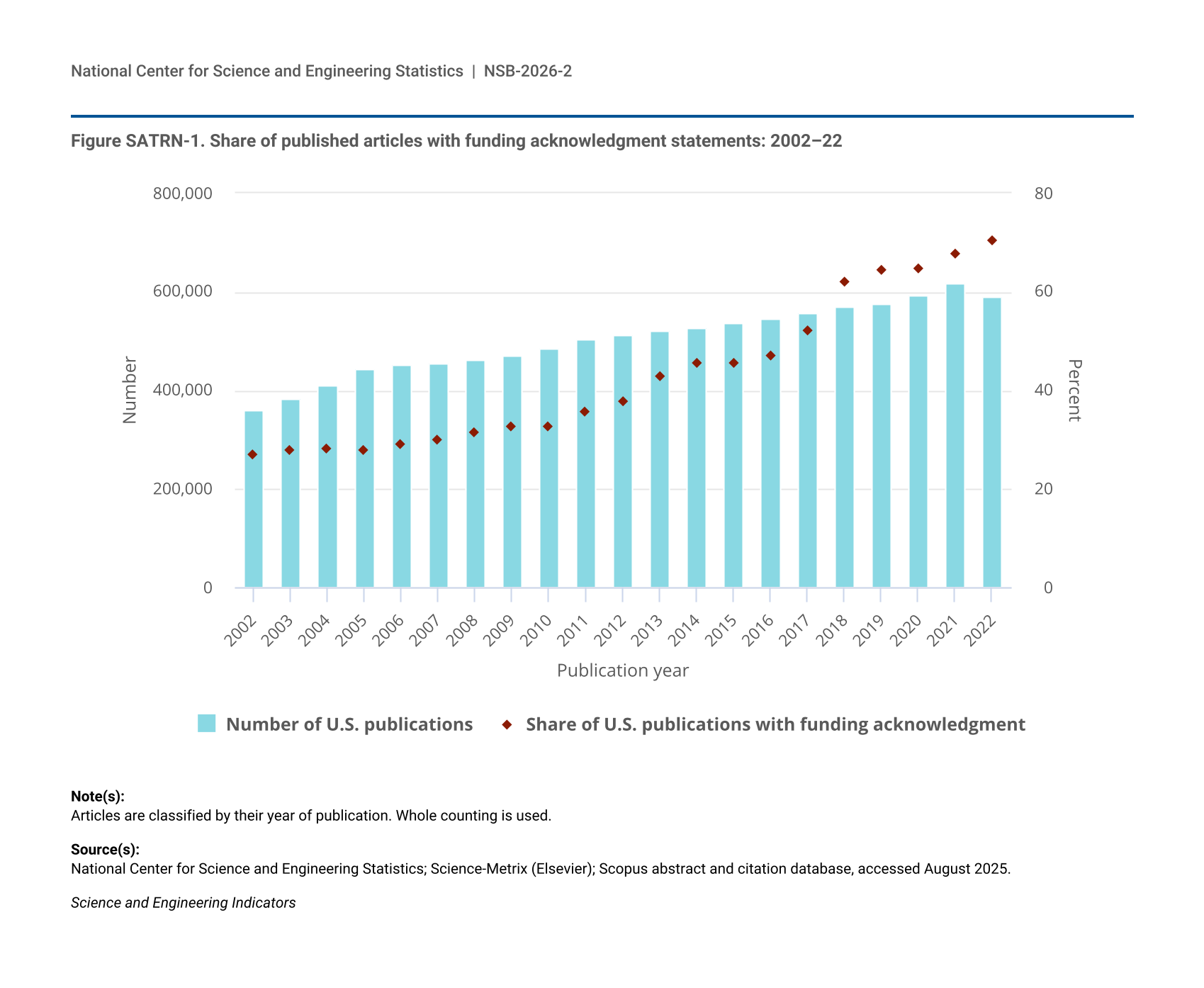
U.S. federal and state agencies cited in the funding acknowledgement section of S&E articles, by citation frequency: 2002–22
TitleU.S. federal and state agencies cited in the funding acknowledgement section of S&E articles, by citation frequency: 2002–22
NumberSTRN-2
STRN-2
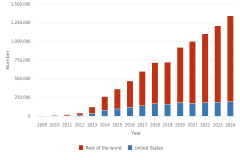
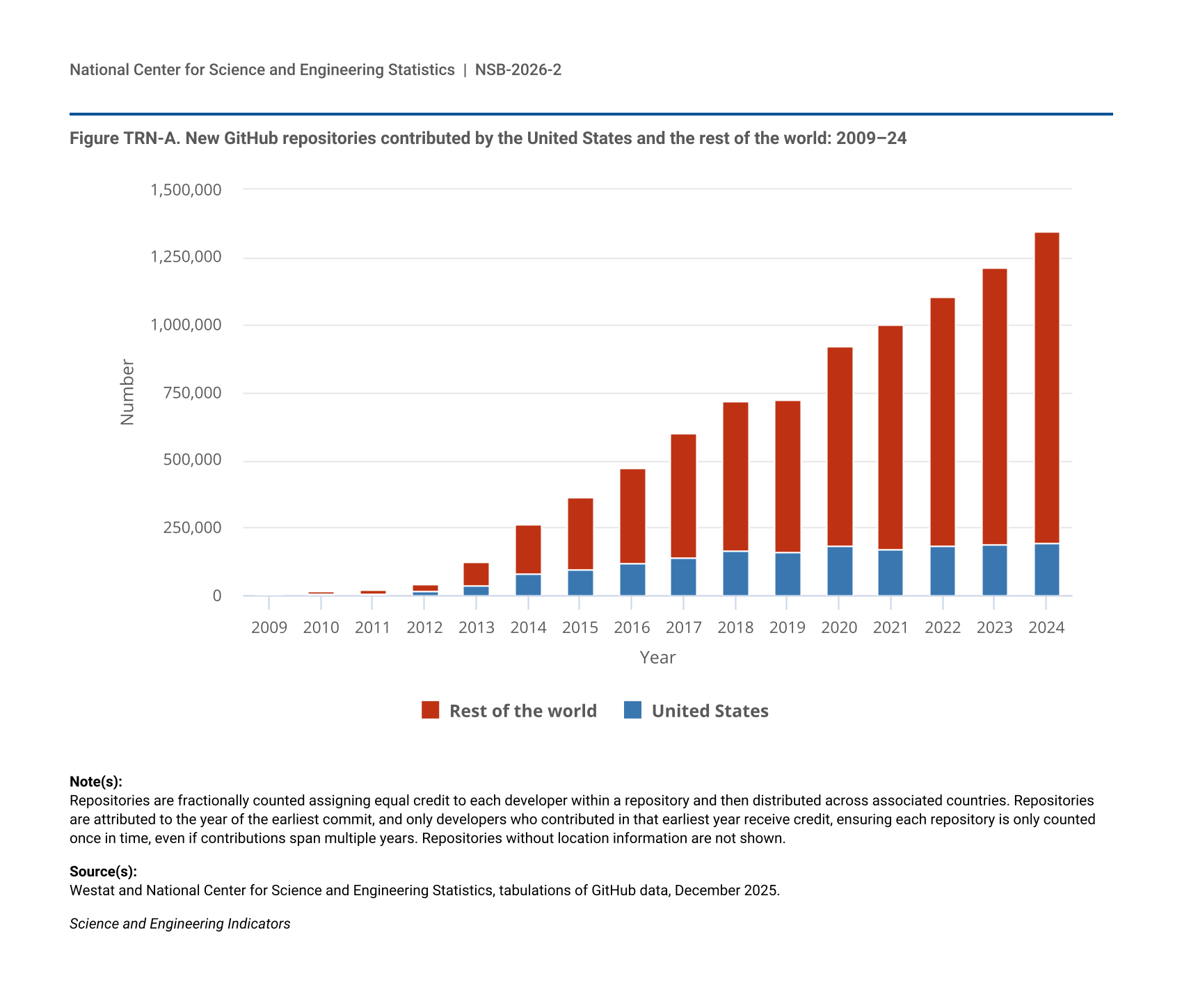
Contributions to New GitHub repositories by selected entities: 2009–24
TitleContributions to New GitHub repositories by selected entities: 2009–24
NumberSTRN-3
STRN-3
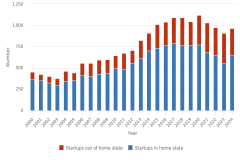
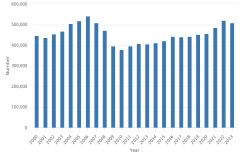
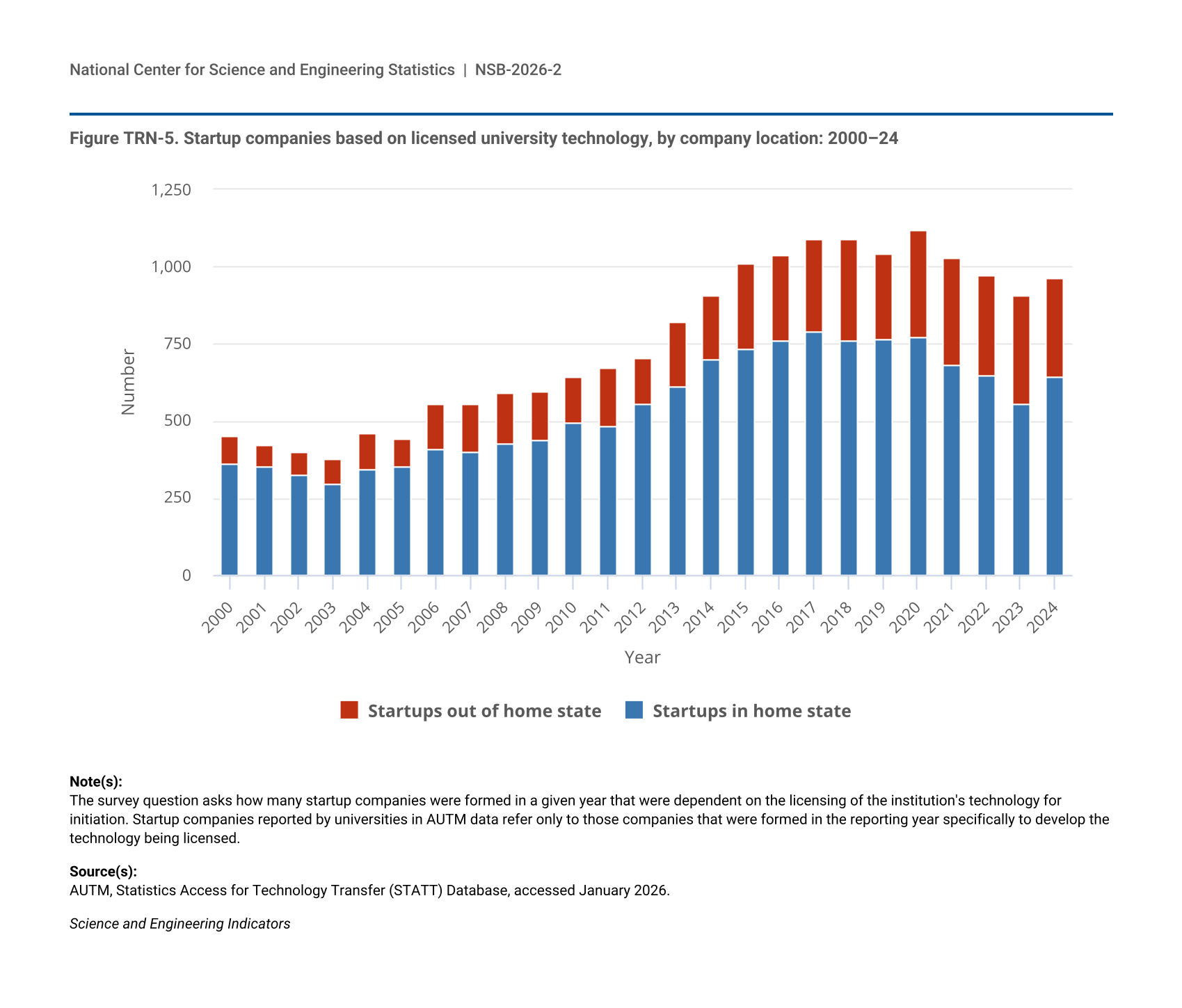
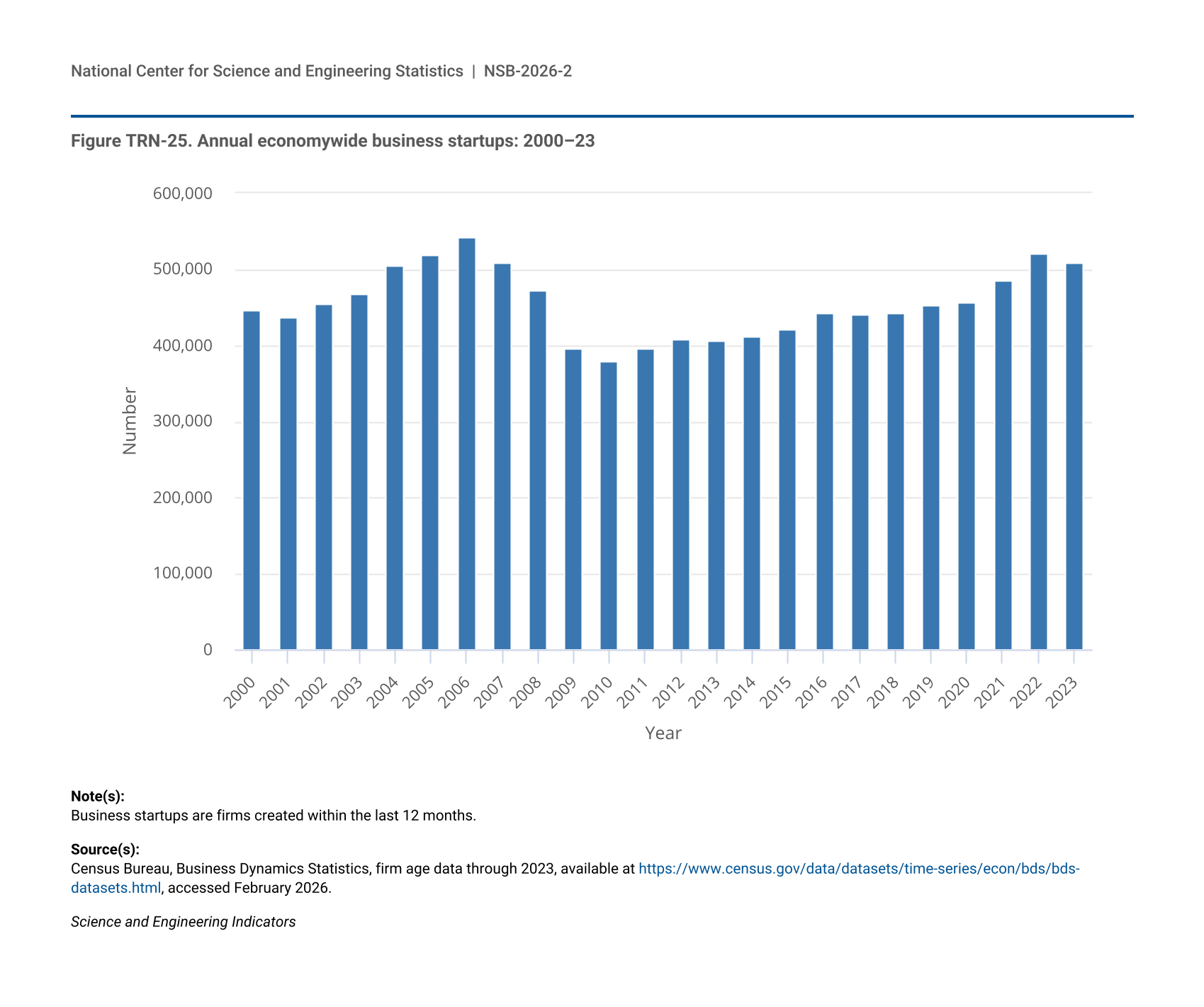
Annual economywide business startups and startups with licensed university technology: 2000–24
TitleAnnual economywide business startups and startups with licensed university technology: 2000–24
NumberSTRN-4
STRN-4
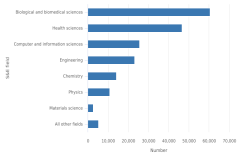
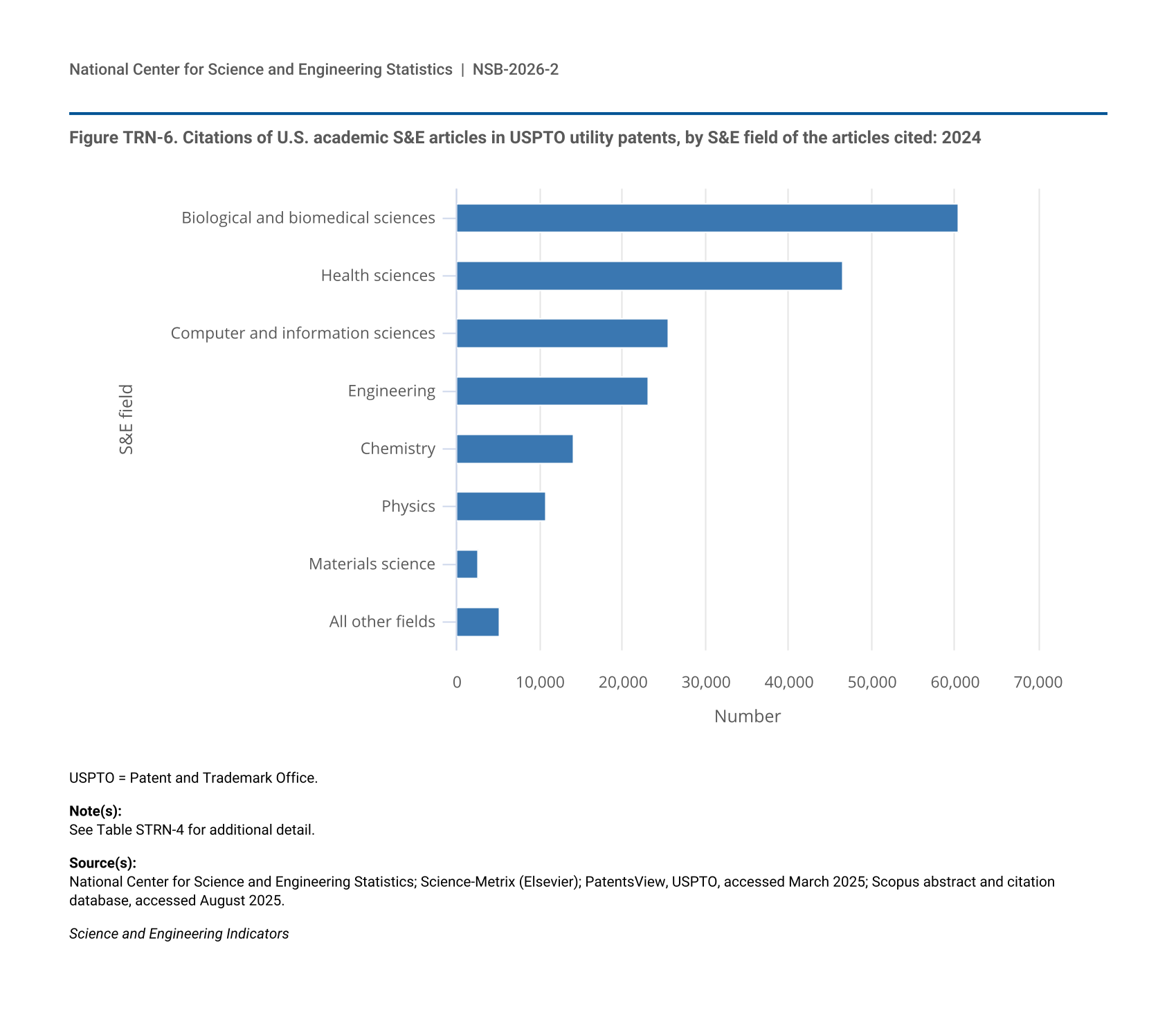
Citations of S&E articles in USPTO utility patents, by cited field, cited author country, and patent sector: 2013–24
TitleCitations of S&E articles in USPTO utility patents, by cited field, cited author country, and patent sector: 2013–24
NumberSTRN-5
STRN-5
S&E articles with authors at federal agencies cited by granted U.S. patents, by author's affiliated agency: 2013–24
TitleS&E articles with authors at federal agencies cited by granted U.S. patents, by author's affiliated agency: 2013–24
NumberSTRN-6
STRN-6
Patents granted to U.S. federal agencies, by inventor's agency of employment: 2013–24
TitlePatents granted to U.S. federal agencies, by inventor's agency of employment: 2013–24
NumberSTRN-7
STRN-7
Scholarly publications with authors from U.S. federal agencies, by S&E discipline: 2013–24
TitleScholarly publications with authors from U.S. federal agencies, by S&E discipline: 2013–24
NumberSTRN-8
STRN-8
S&E articles with authors from U.S. federal agencies, by author's affiliated agency: 2013–24
TitleS&E articles with authors from U.S. federal agencies, by author's affiliated agency: 2013–24
NumberSTRN-9
STRN-9
S&E articles with authors at federal agencies cited by granted U.S. patents, by article field: 2013–24
TitleS&E articles with authors at federal agencies cited by granted U.S. patents, by article field: 2013–24
NumberSTRN-10
STRN-10
Patents granted to U.S. federal agencies, by technology area: 2013–24
TitlePatents granted to U.S. federal agencies, by technology area: 2013–24
NumberSTRN-11
STRN-11
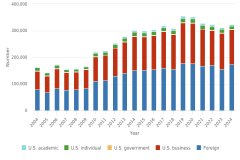
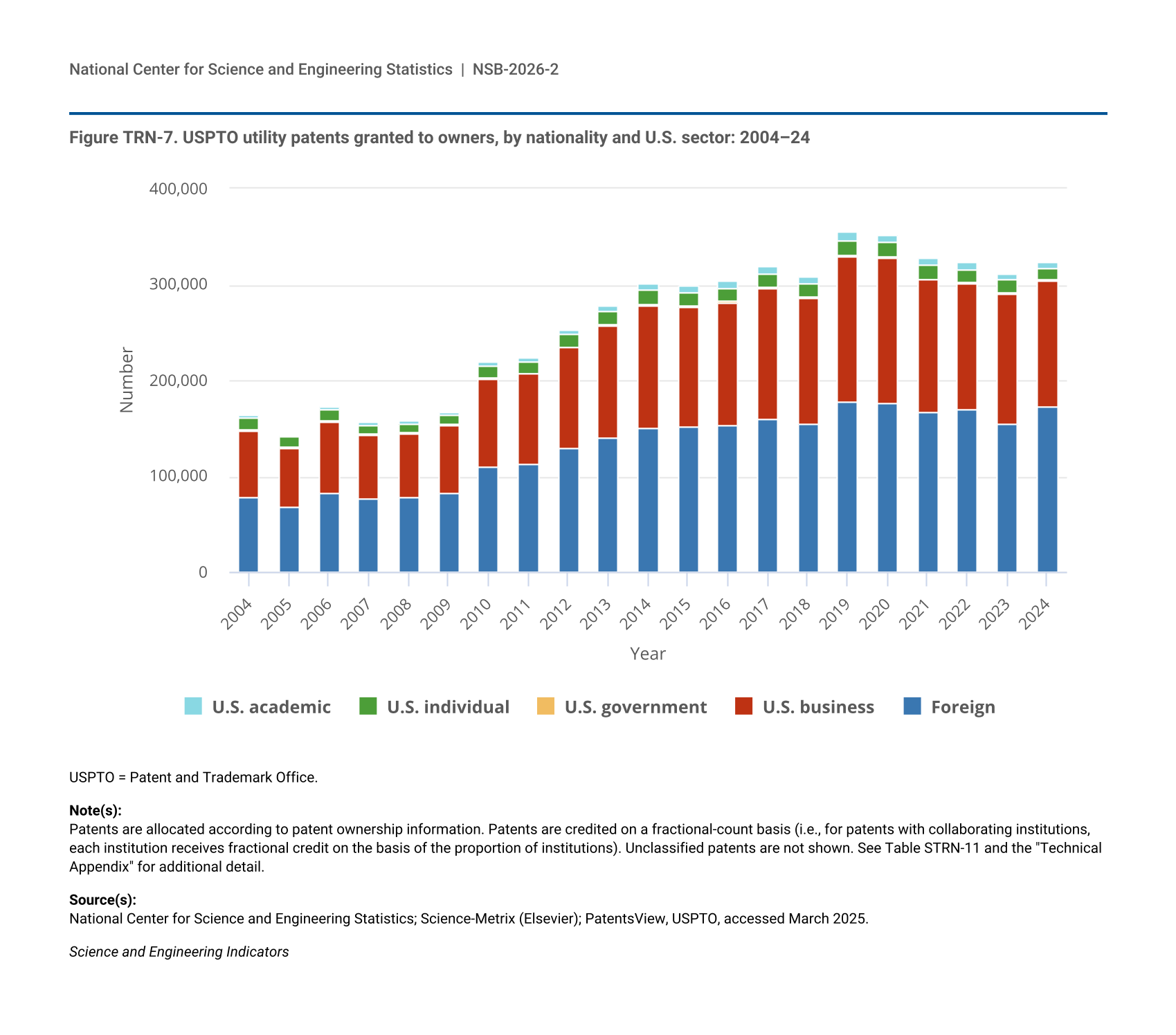
USPTO utility patents granted to owners, by sector: 2000–24
TitleUSPTO utility patents granted to owners, by sector: 2000–24
NumberSTRN-12
STRN-12
NSF TIP key technology areas and technology foci key terms
TitleNSF TIP key technology areas and technology foci key terms
NumberSTRN-13
STRN-13
Mapping of critical technologies to CPC codes
TitleMapping of critical technologies to CPC codes
NumberSTRN-14
STRN-14
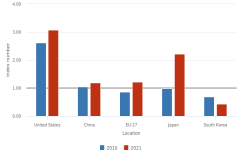
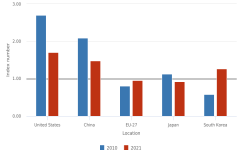
Patent citation index of international patent families granted in critical technology categories, by selected region, country, or economy of patent inventor: 2021
TitlePatent citation index of international patent families granted in critical technology categories, by selected region, country, or economy of patent inventor: 2021
NumberSTRN-15
STRN-15
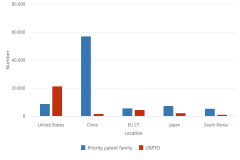
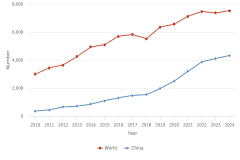
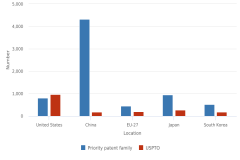
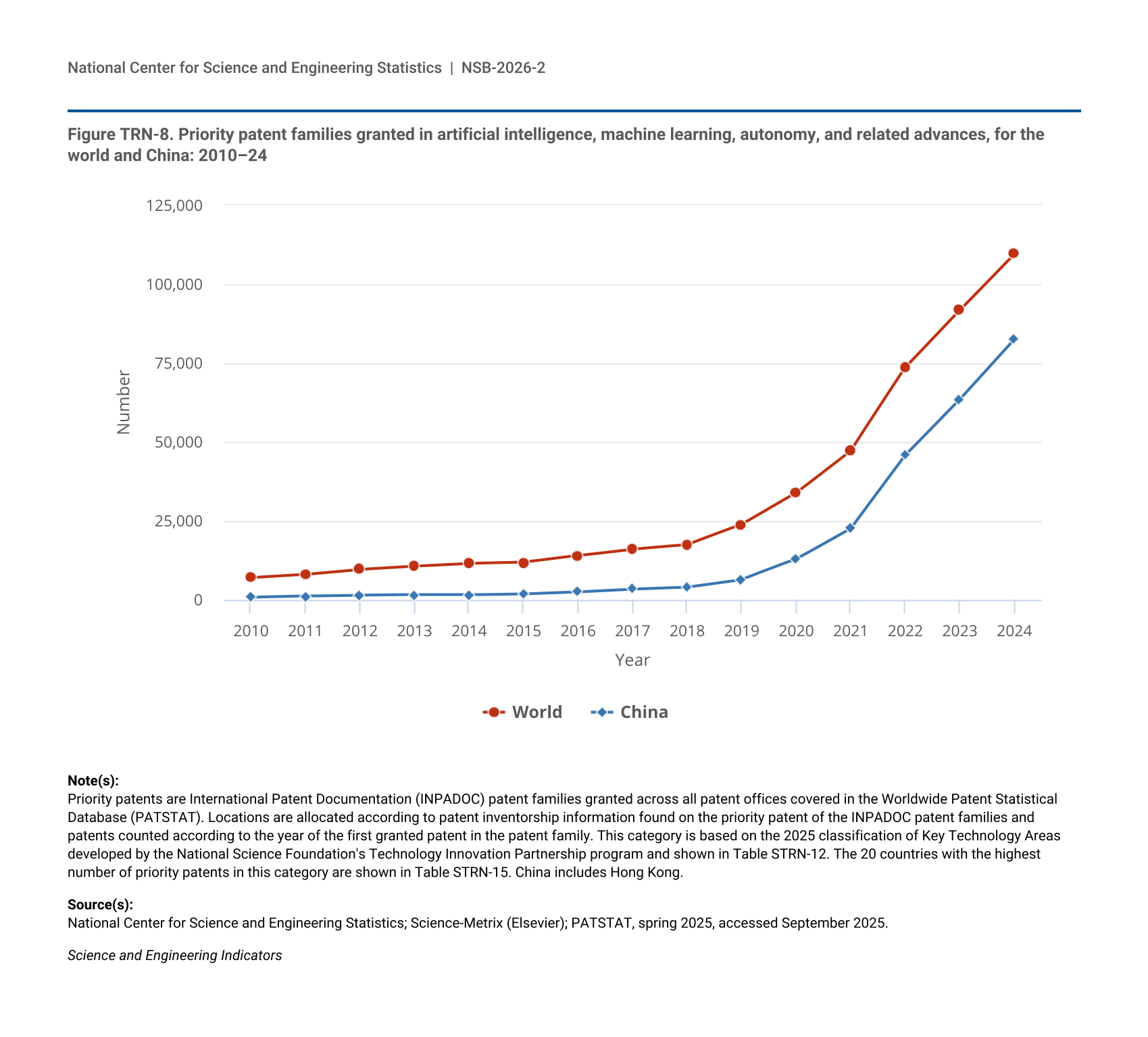
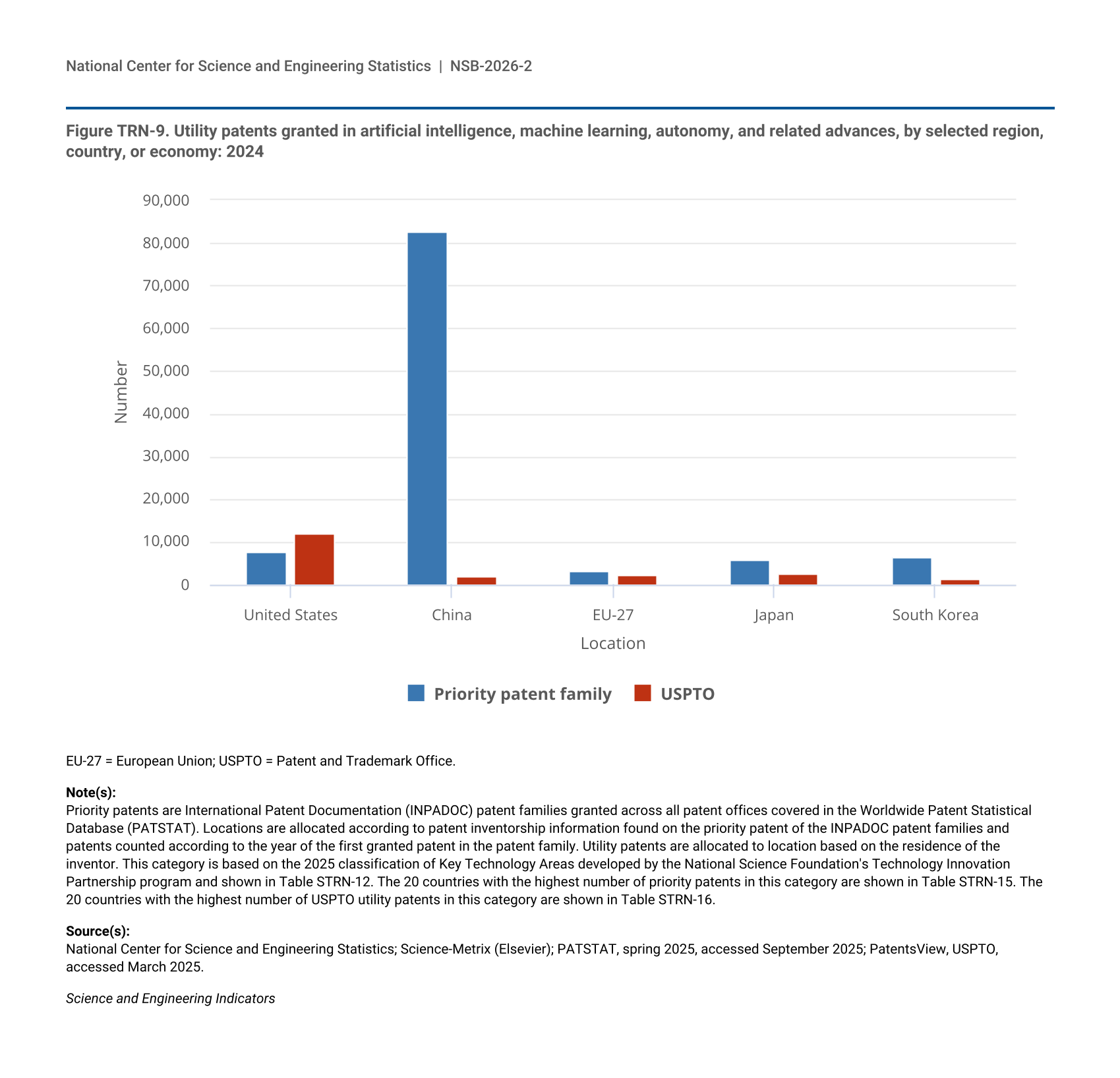
Priority patent families granted in artificial intelligence, machine learning, autonomy, and related advances for the top 20 most-patenting regions, countries, or economies: 2010–24
TitlePriority patent families granted in artificial intelligence, machine learning, autonomy, and related advances for the top 20 most-patenting regions, countries, or economies: 2010–24
NumberSTRN-16
STRN-16
USPTO utility patents granted in artificial intelligence, machine learning, autonomy, and related advances for the top 20 most-patenting regions, countries, or economies: 2010–24
TitleUSPTO utility patents granted in artificial intelligence, machine learning, autonomy, and related advances for the top 20 most-patenting regions, countries, or economies: 2010–24
NumberSTRN-17
STRN-17
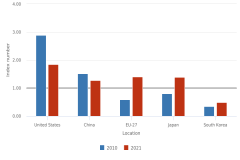
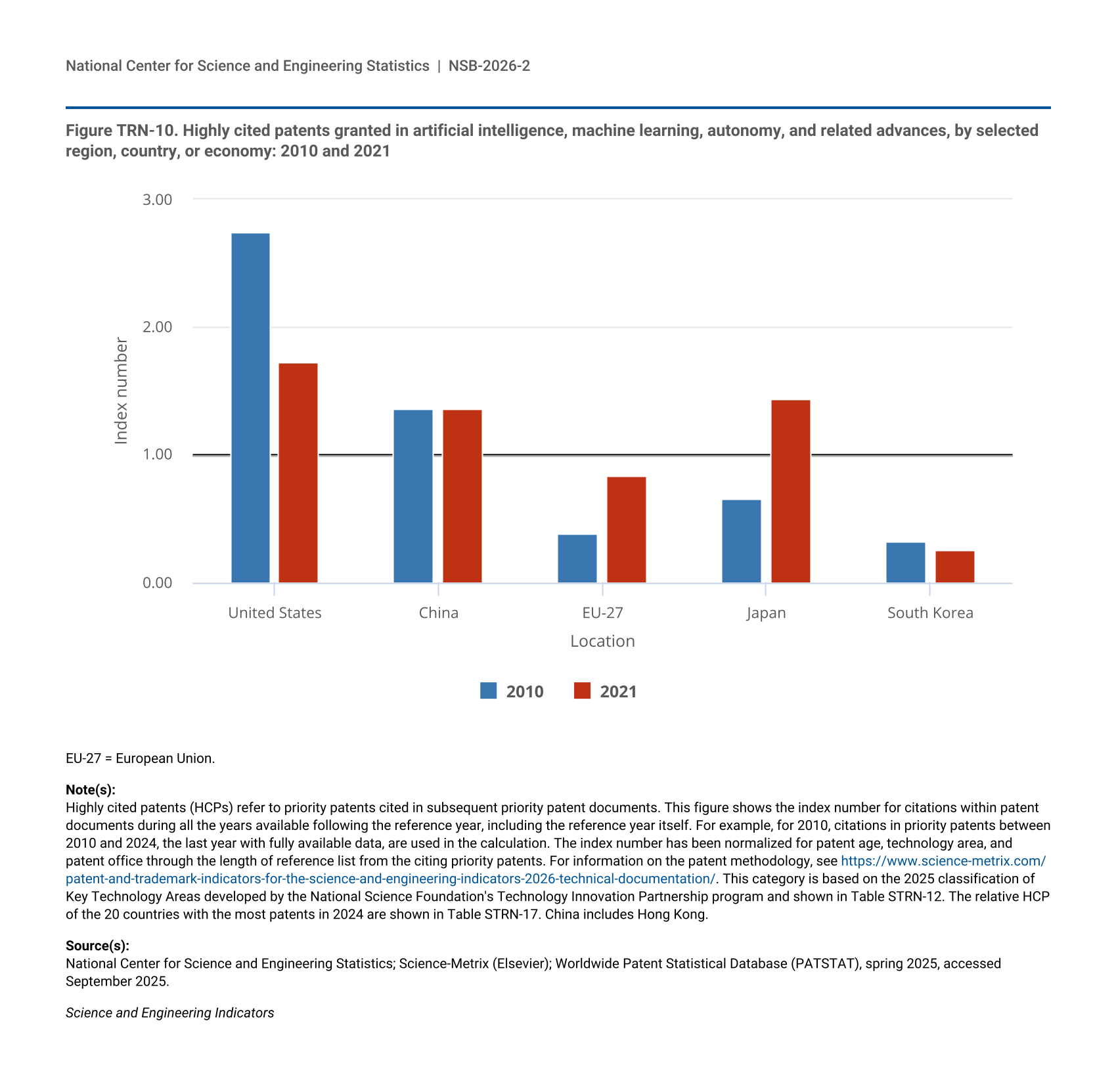
Highly cited patents in artificial intelligence, machine learning, autonomy, and related advances for the top 20 most-patenting regions, countries, or economies: 2010–21
TitleHighly cited patents in artificial intelligence, machine learning, autonomy, and related advances for the top 20 most-patenting regions, countries, or economies: 2010–21
NumberSTRN-18
STRN-18
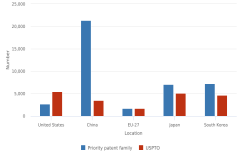
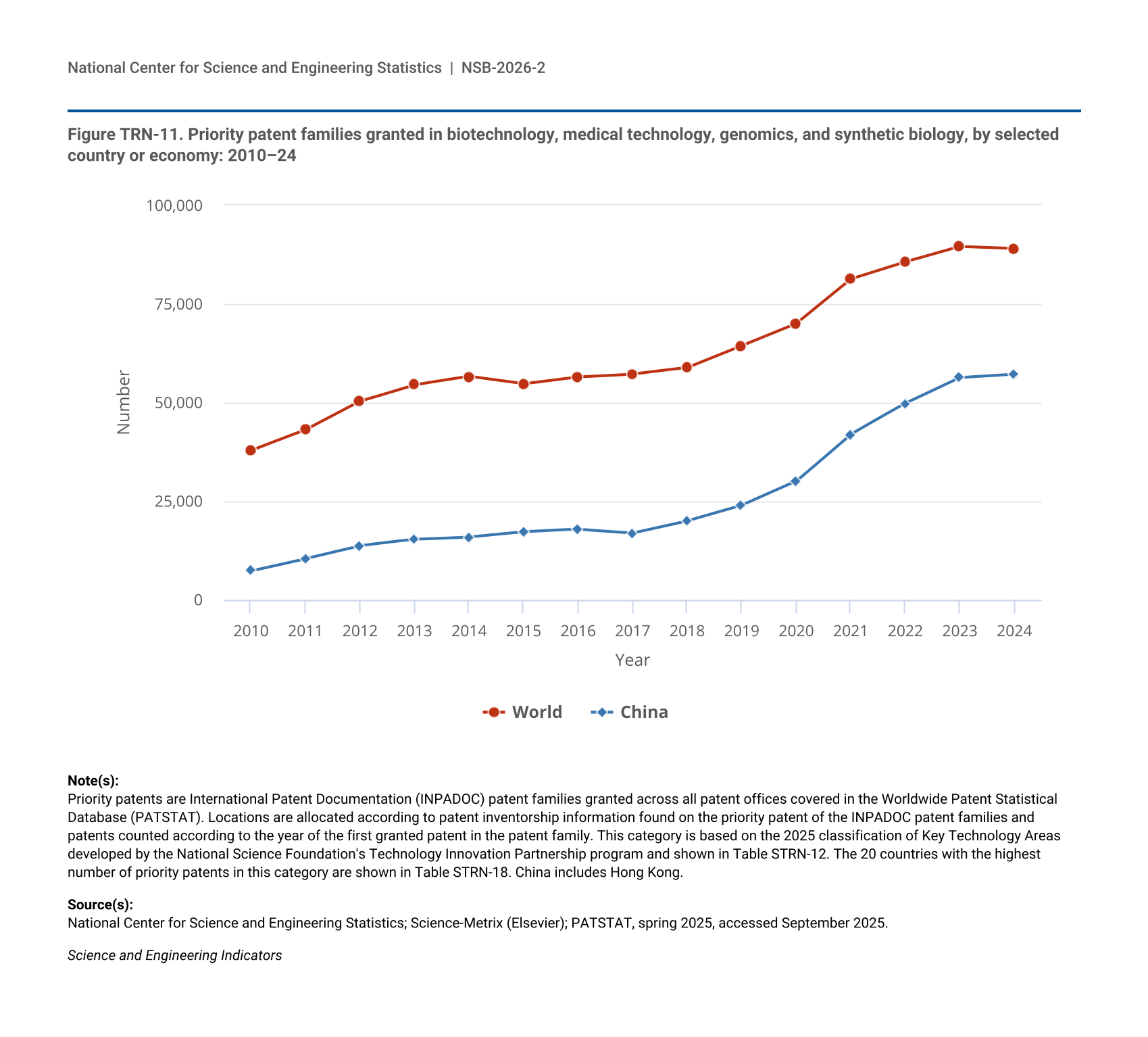
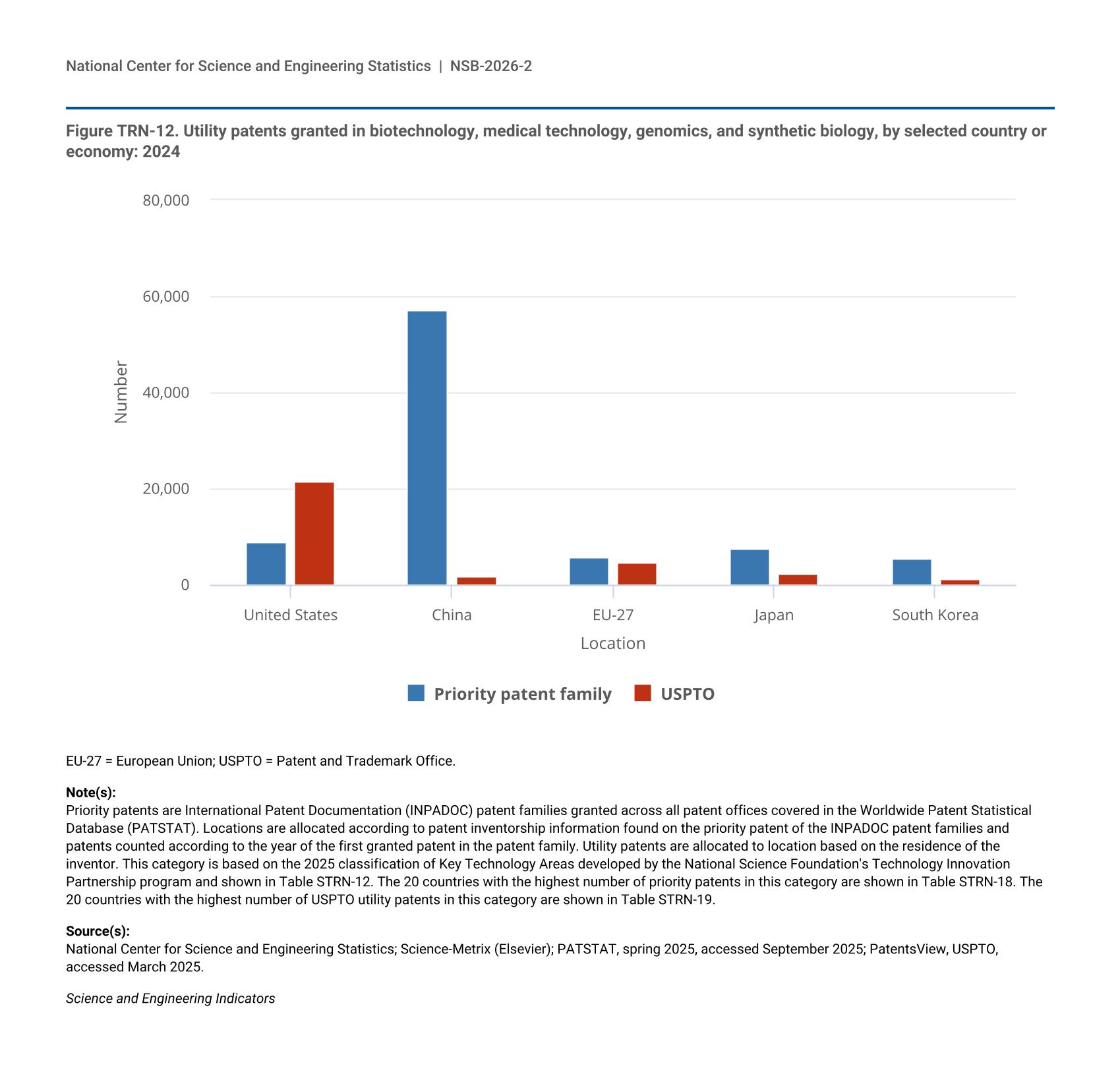
Priority patent families granted in biotechnology, medical technology, genomics, and synthetic biology for the top 20 most-patenting regions, countries, or economies: 2010–24
TitlePriority patent families granted in biotechnology, medical technology, genomics, and synthetic biology for the top 20 most-patenting regions, countries, or economies: 2010–24
NumberSTRN-19
STRN-19
USPTO utility patents granted in biotechnology, medical technology, genomics, and synthetic biology for the top 20 most-patenting regions, countries, or economies: 2010–24
TitleUSPTO utility patents granted in biotechnology, medical technology, genomics, and synthetic biology for the top 20 most-patenting regions, countries, or economies: 2010–24
NumberSTRN-20
STRN-20
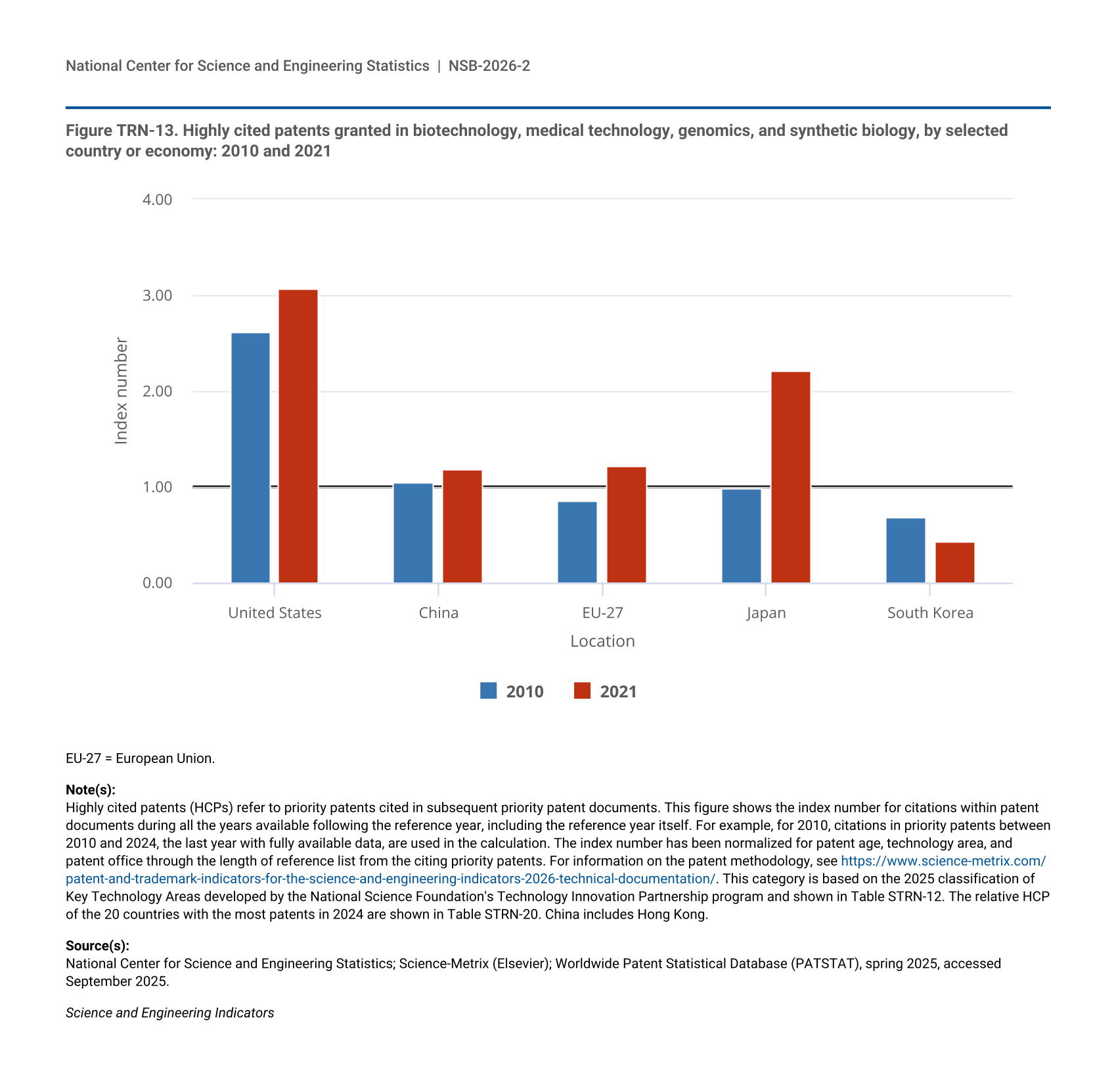
Highly cited patents in biotechnology, medical technology, genomics, and synthetic biology for the top 20 most-patenting regions, countries, or economies: 2010–21
TitleHighly cited patents in biotechnology, medical technology, genomics, and synthetic biology for the top 20 most-patenting regions, countries, or economies: 2010–21
NumberSTRN-21
STRN-21
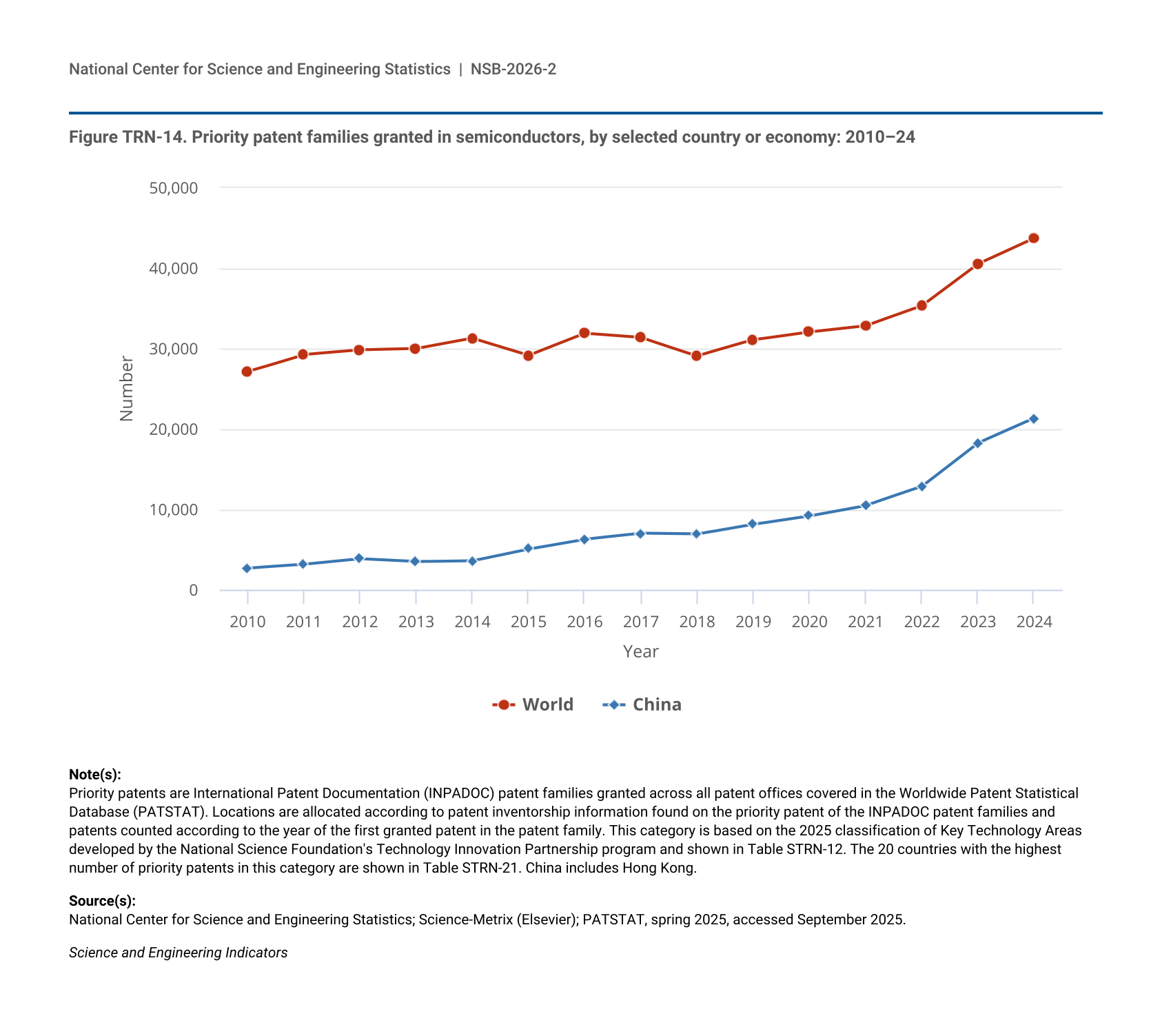
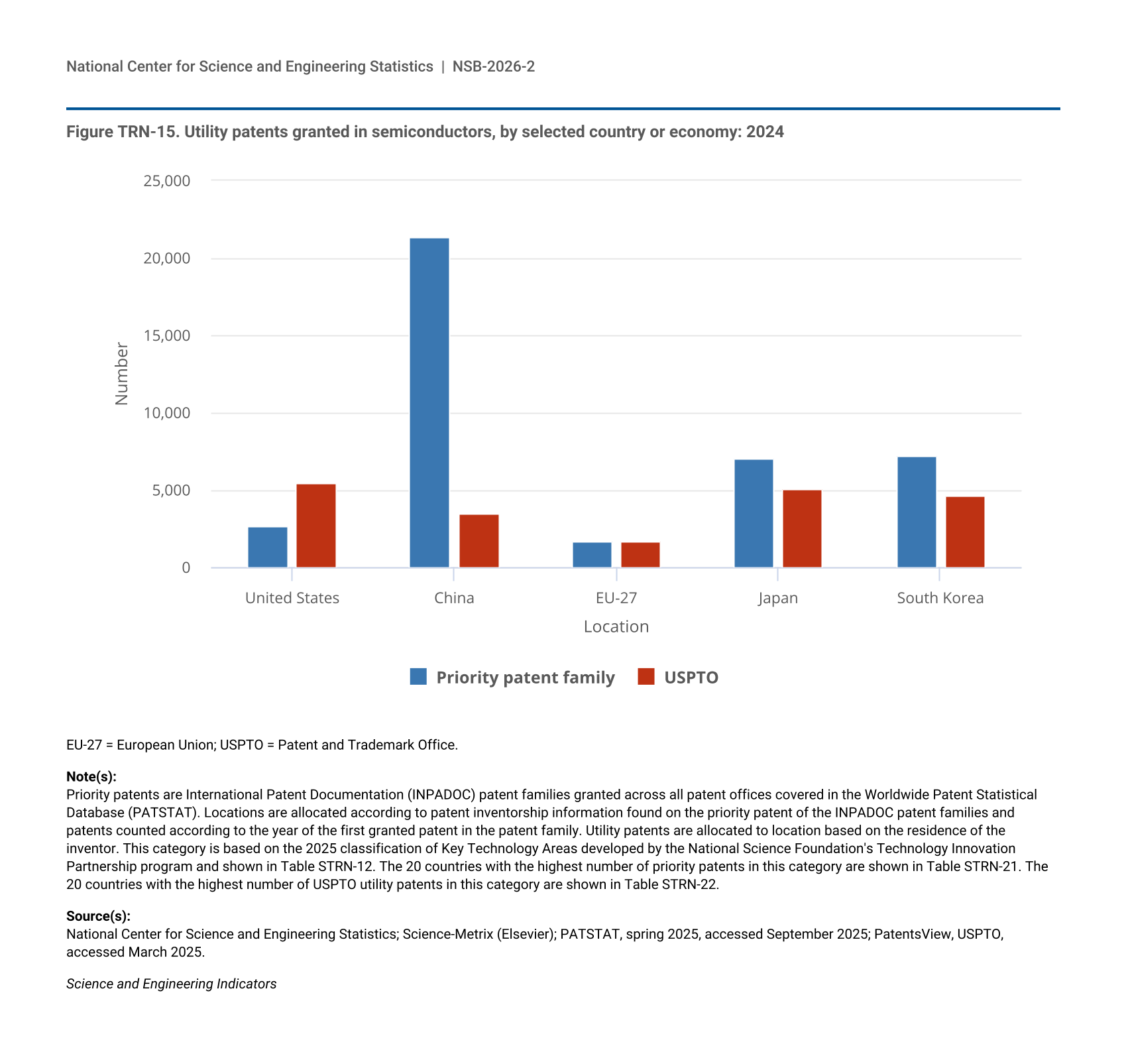
Priority patent families granted in semiconductors for the top 20 most-patenting regions, countries, or economies: 2010–24
TitlePriority patent families granted in semiconductors for the top 20 most-patenting regions, countries, or economies: 2010–24
NumberSTRN-22
STRN-22
USPTO utility patents granted in semiconductors for the top 20 most-patenting regions, countries, or economies: 2010–24
TitleUSPTO utility patents granted in semiconductors for the top 20 most-patenting regions, countries, or economies: 2010–24
NumberSTRN-23
STRN-23
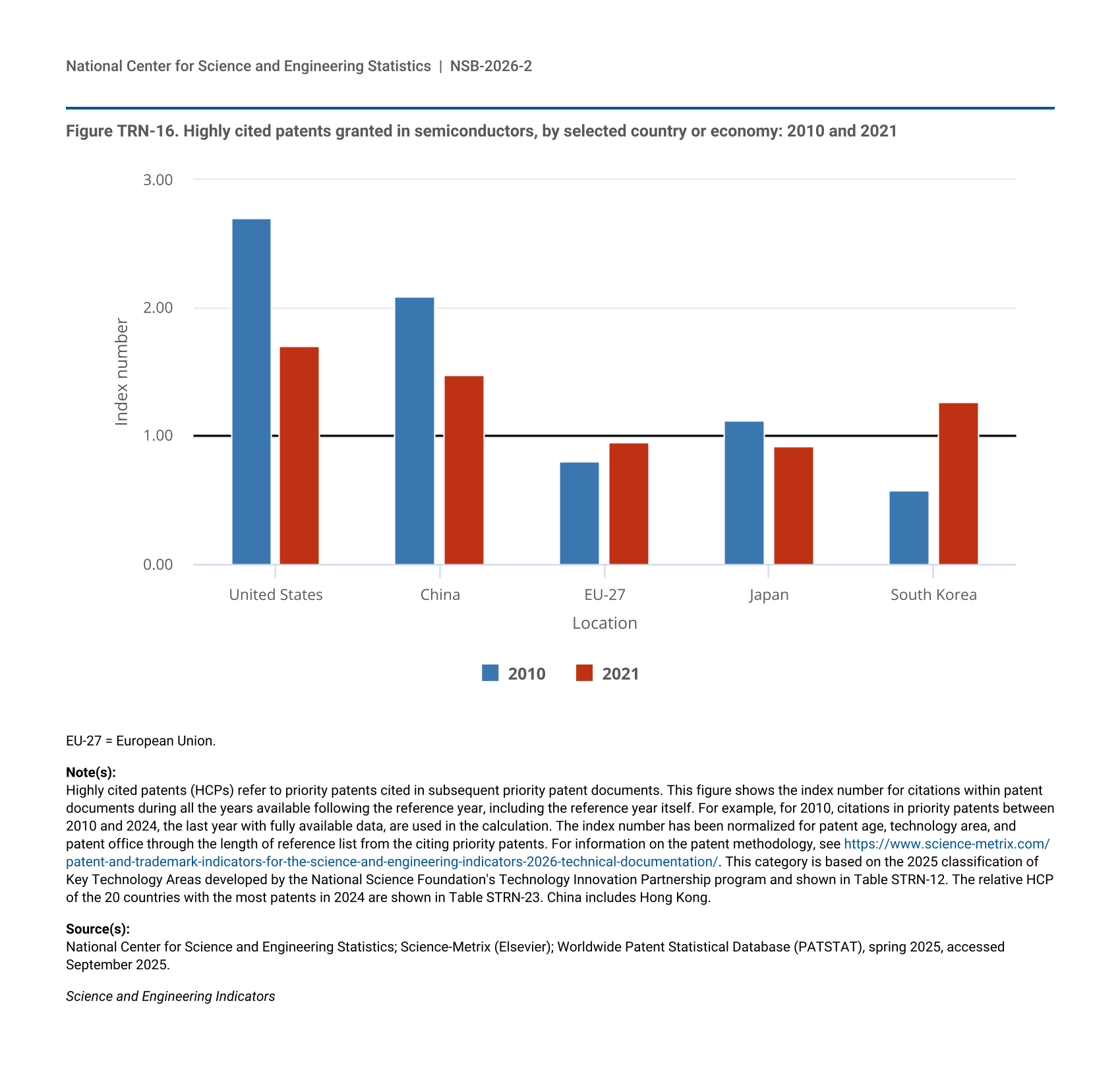
Highly cited patents in semiconductors for the top 20 most-patenting regions, countries, or economies: 2010–21
TitleHighly cited patents in semiconductors for the top 20 most-patenting regions, countries, or economies: 2010–21
NumberSTRN-24
STRN-24
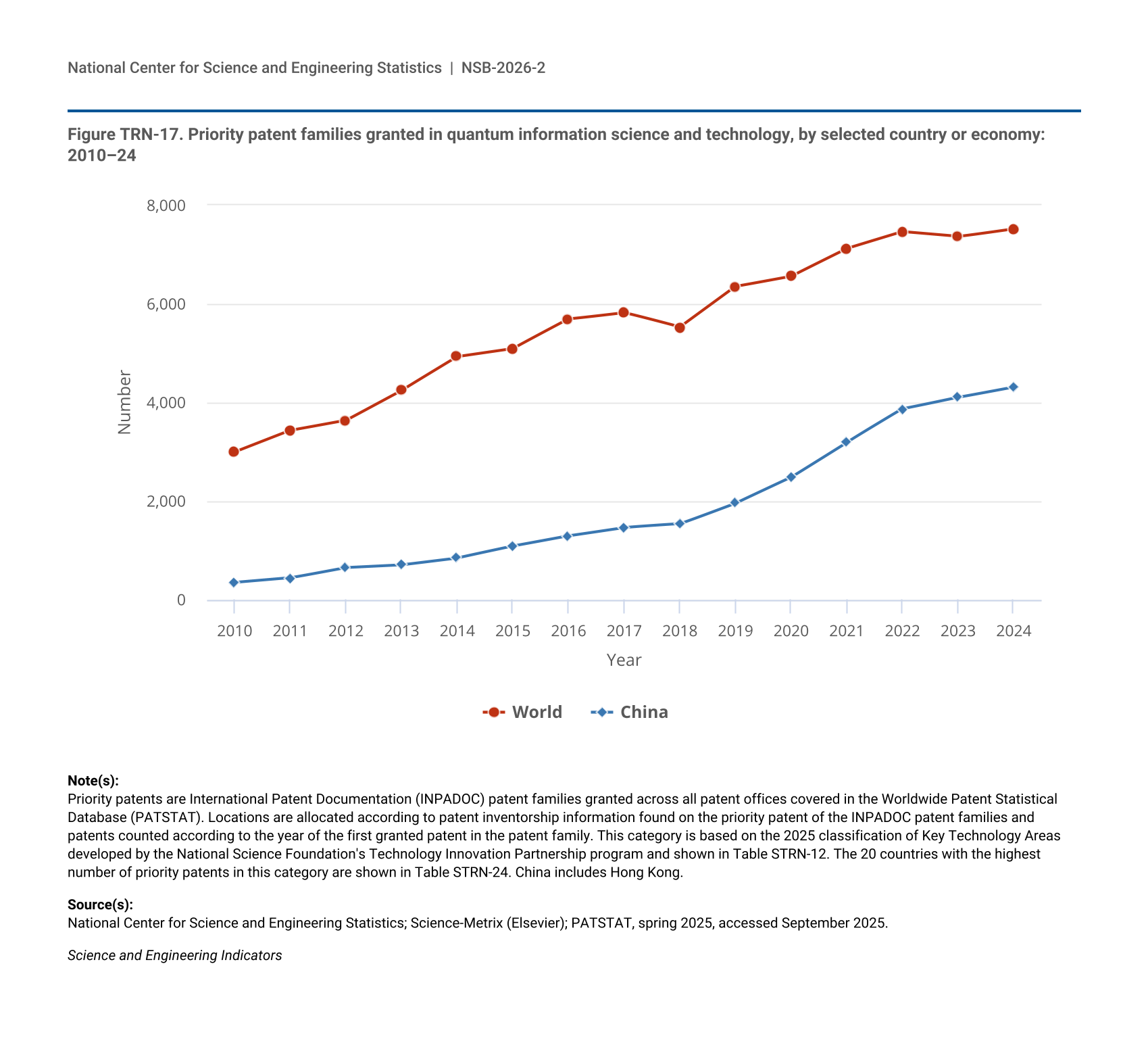
Priority patent families granted in quantum information science and technology for the top 20 most-patenting regions, countries, or economies: 2010–24
TitlePriority patent families granted in quantum information science and technology for the top 20 most-patenting regions, countries, or economies: 2010–24
NumberSTRN-25
STRN-25
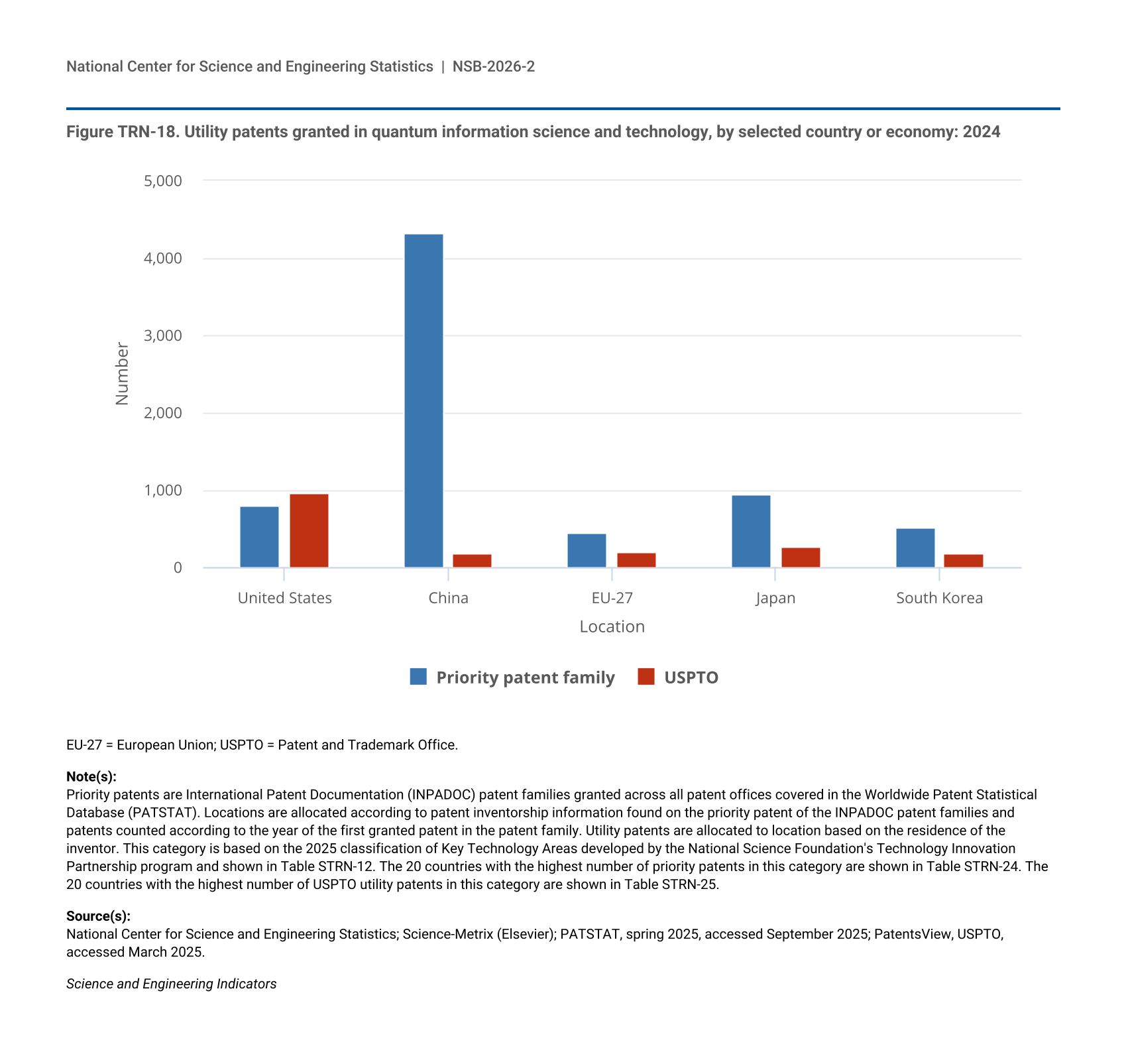
USPTO utility patents granted in quantum information science and technology for the top 20 most-patenting regions, countries, or economies: 2010–24
TitleUSPTO utility patents granted in quantum information science and technology for the top 20 most-patenting regions, countries, or economies: 2010–24
NumberSTRN-26
STRN-26
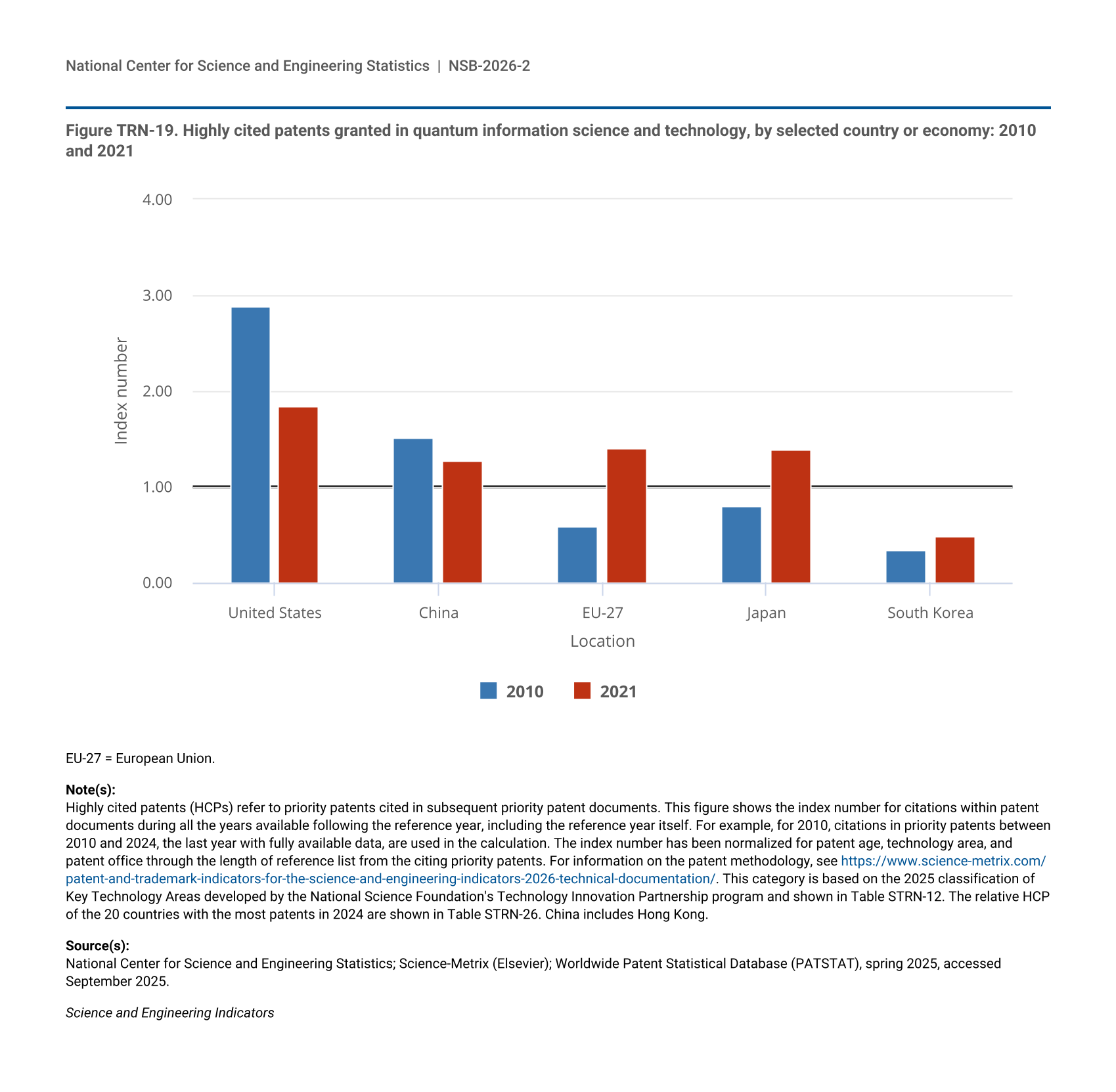
Highly cited patents in quantum information science and technology for the top 20 most-patenting regions, countries, or economies: 2010–21
TitleHighly cited patents in quantum information science and technology for the top 20 most-patenting regions, countries, or economies: 2010–21
NumberSTRN-27
STRN-27
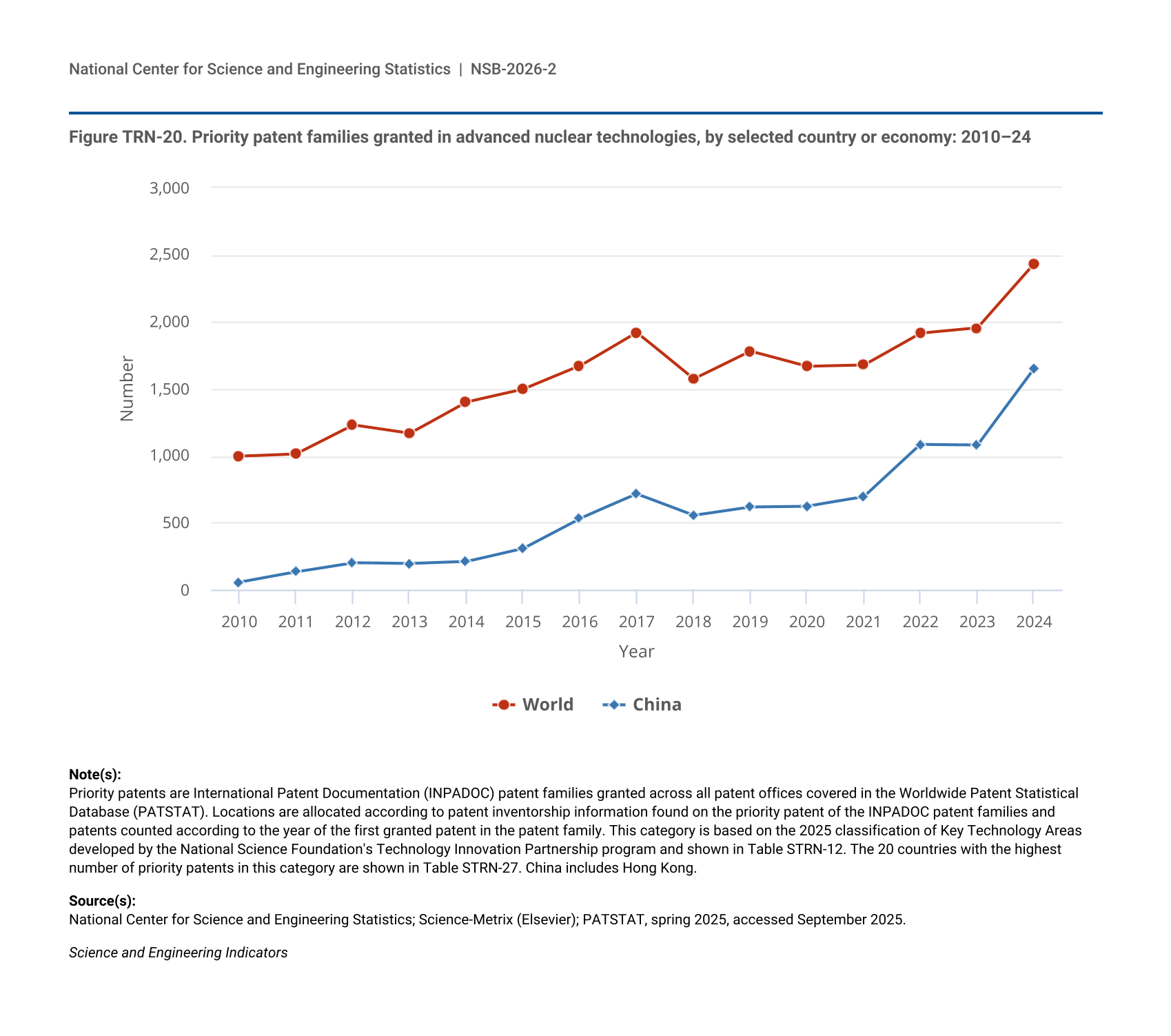
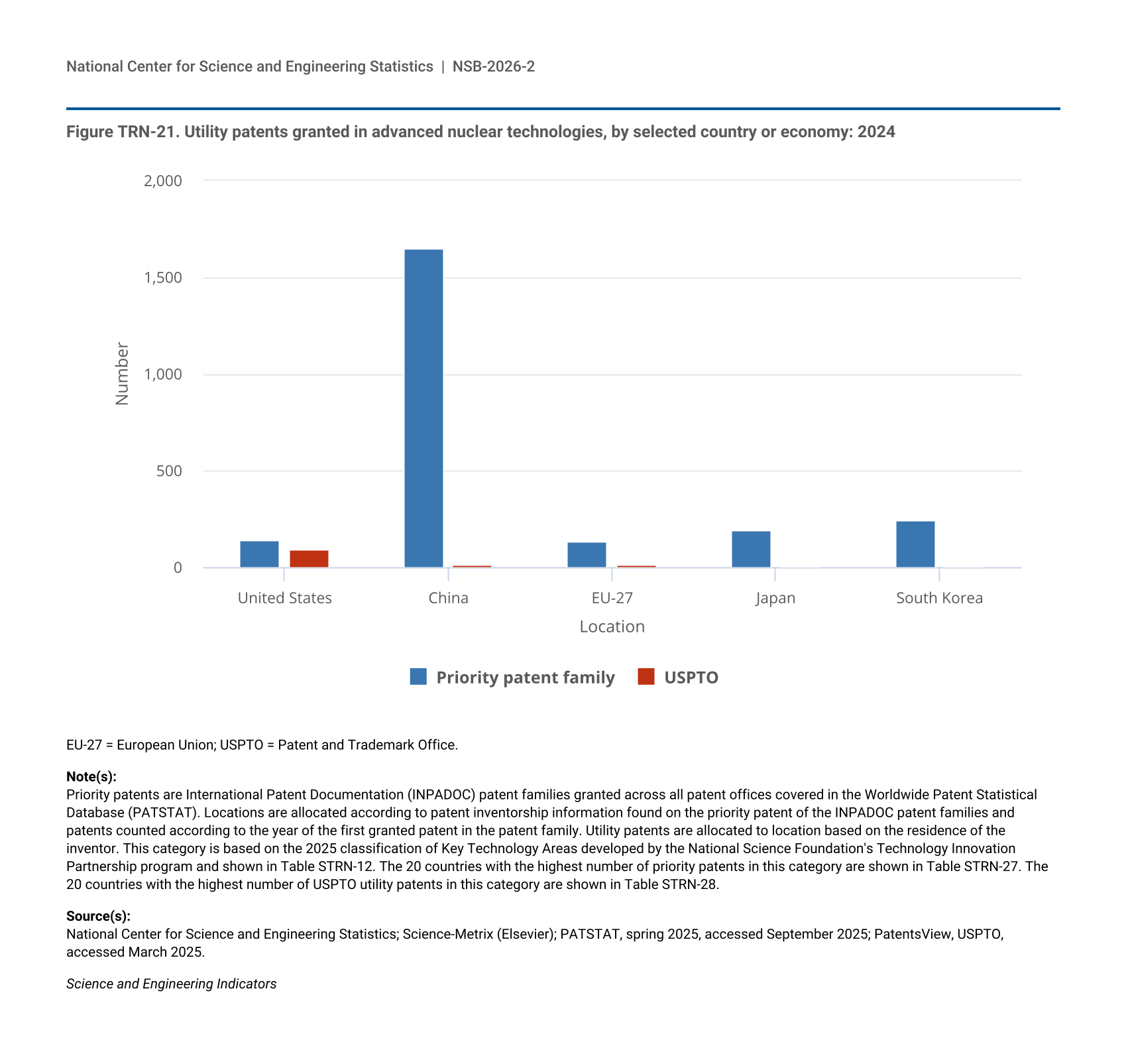
Priority patent families granted in advanced nuclear technologies for the top 20 most-patenting regions, countries, or economies: 2010–24
TitlePriority patent families granted in advanced nuclear technologies for the top 20 most-patenting regions, countries, or economies: 2010–24
NumberSTRN-28
STRN-28
USPTO utility patents granted in advanced nuclear technologies for the top 20 most-patenting regions, countries, or economies: 2010–24
TitleUSPTO utility patents granted in advanced nuclear technologies for the top 20 most-patenting regions, countries, or economies: 2010–24
NumberSTRN-29
STRN-29
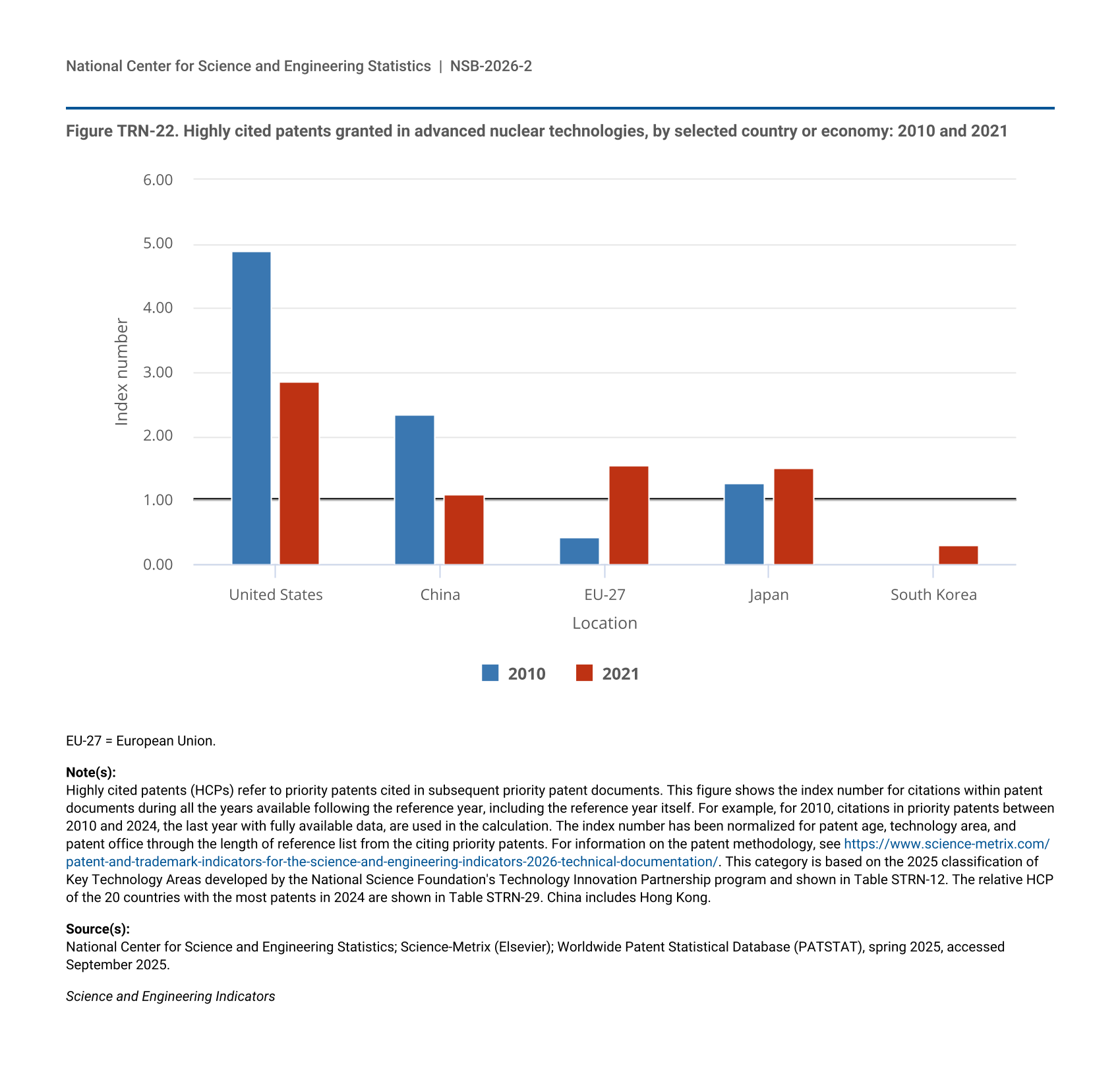
Highly cited patents in advanced nuclear technologies for the top 20 most-patenting regions, countries, or economies: 2010–21
TitleHighly cited patents in advanced nuclear technologies for the top 20 most-patenting regions, countries, or economies: 2010–21
NumberSTRN-30
STRN-30
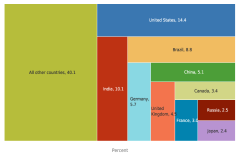
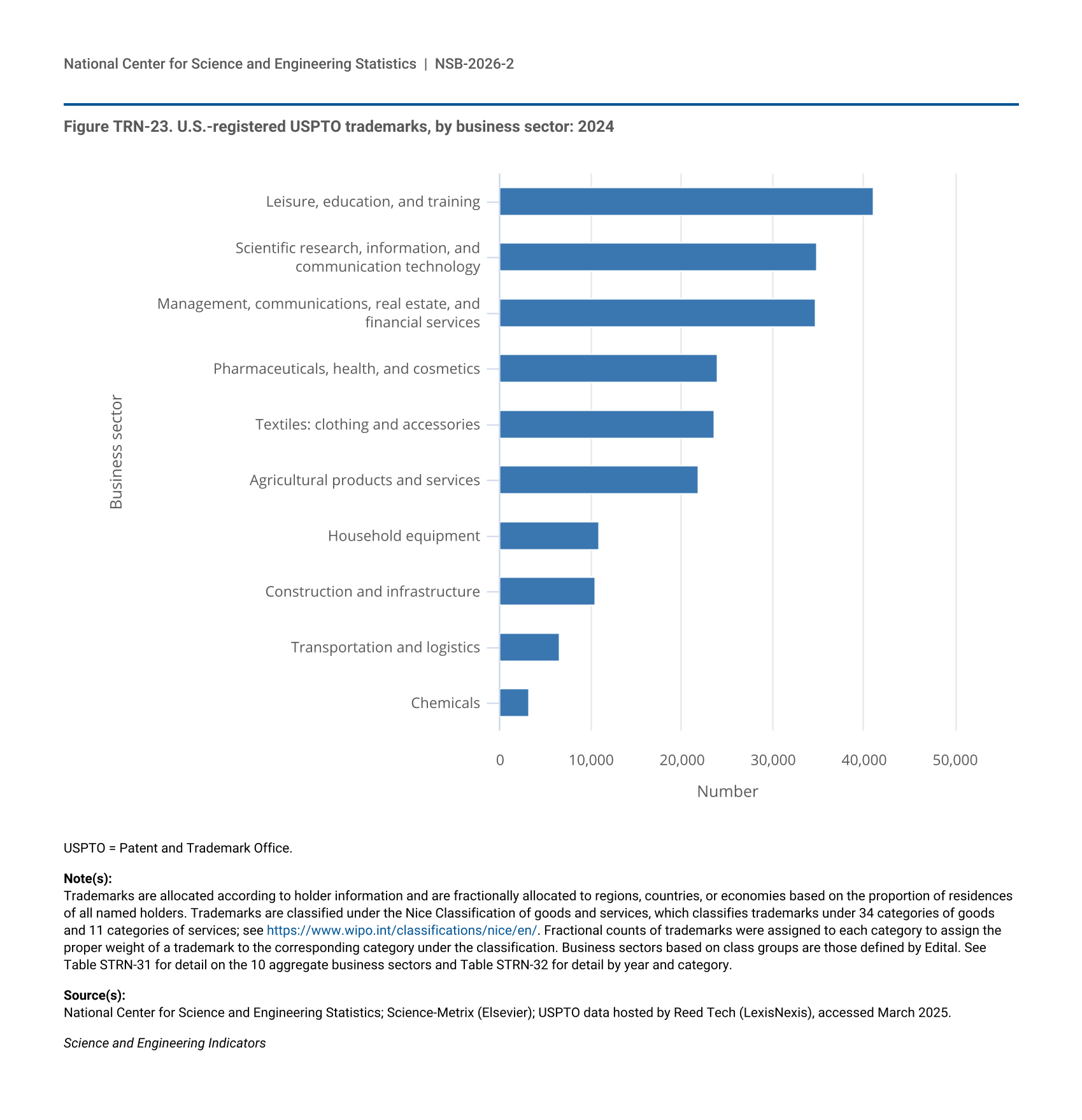
Registered USPTO trademarks, by region, country, or economy: 2000–24
TitleRegistered USPTO trademarks, by region, country, or economy: 2000–24
NumberSTRN-31
STRN-31
Nice Classifications in trademark data, by business sector: 2000–24
TitleNice Classifications in trademark data, by business sector: 2000–24
NumberSTRN-32
STRN-32
U.S.-registered USPTO trademarks, by Nice Classification: 2000–24
TitleU.S.-registered USPTO trademarks, by Nice Classification: 2000–24
NumberSTRN-33
STRN-33
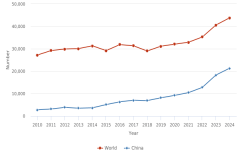
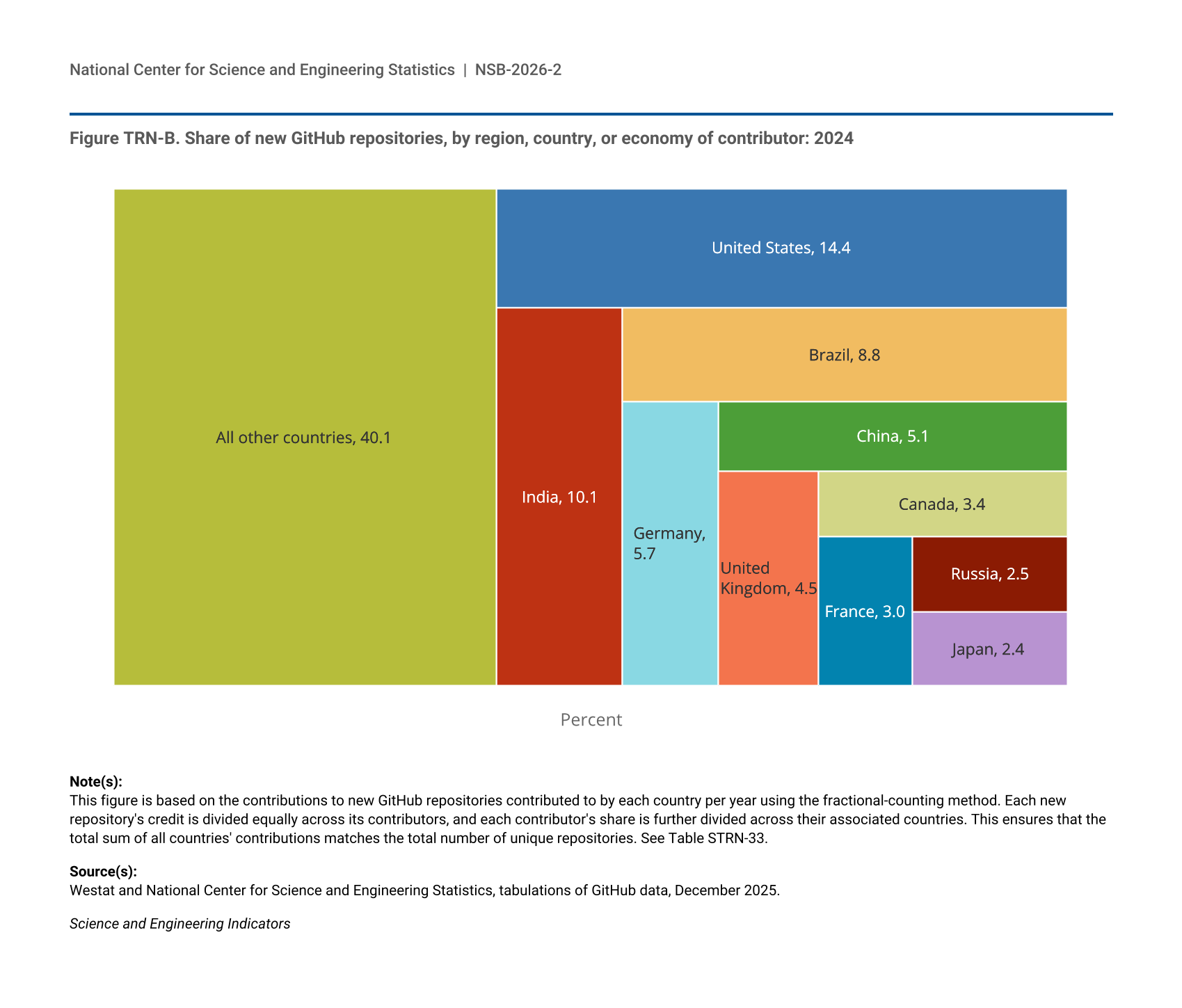
New GitHub repositories contributed to, by selected region, country, or economy: 2009–24
TitleNew GitHub repositories contributed to, by selected region, country, or economy: 2009–24
NumberSTRN-34
STRN-34
Total GitHub repositories contributed to by selected entities: 2009–24
TitleTotal GitHub repositories contributed to by selected entities: 2009–24
NumberSTRN-35
STRN-35
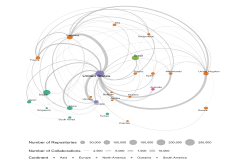
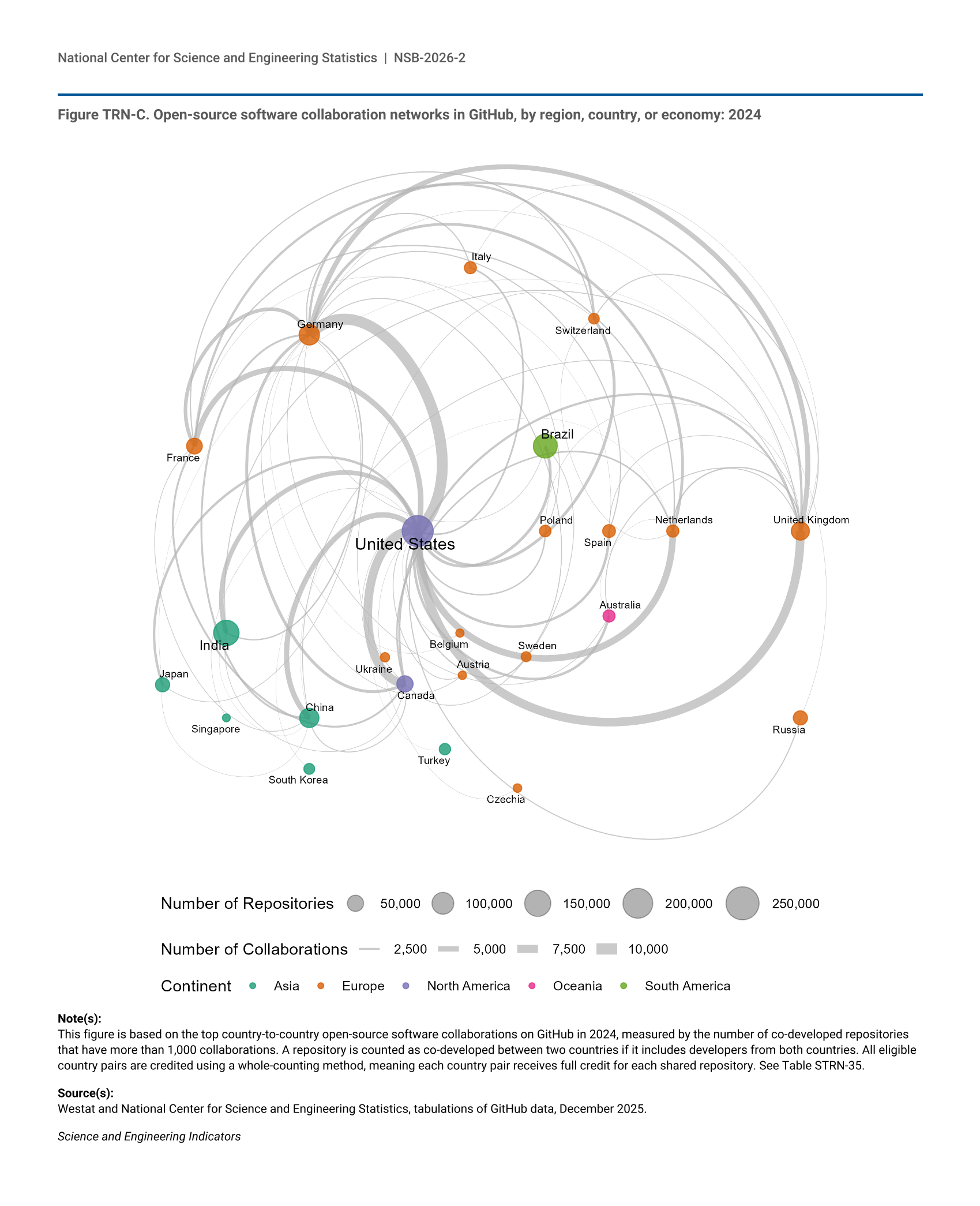
Open-source software collaboration networks in GitHub, by region, country, or economy: 2024
TitleOpen-source software collaboration networks in GitHub, by region, country, or economy: 2024
NumberSTRN-36
STRN-36
Open-source software repositories contributed to in GitHub, by country of contributor: 2024
TitleOpen-source software repositories contributed to in GitHub, by country of contributor: 2024
NumberSTRN-37
STRN-37
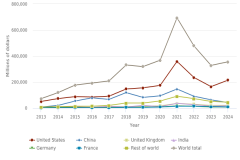
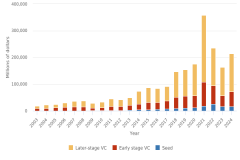
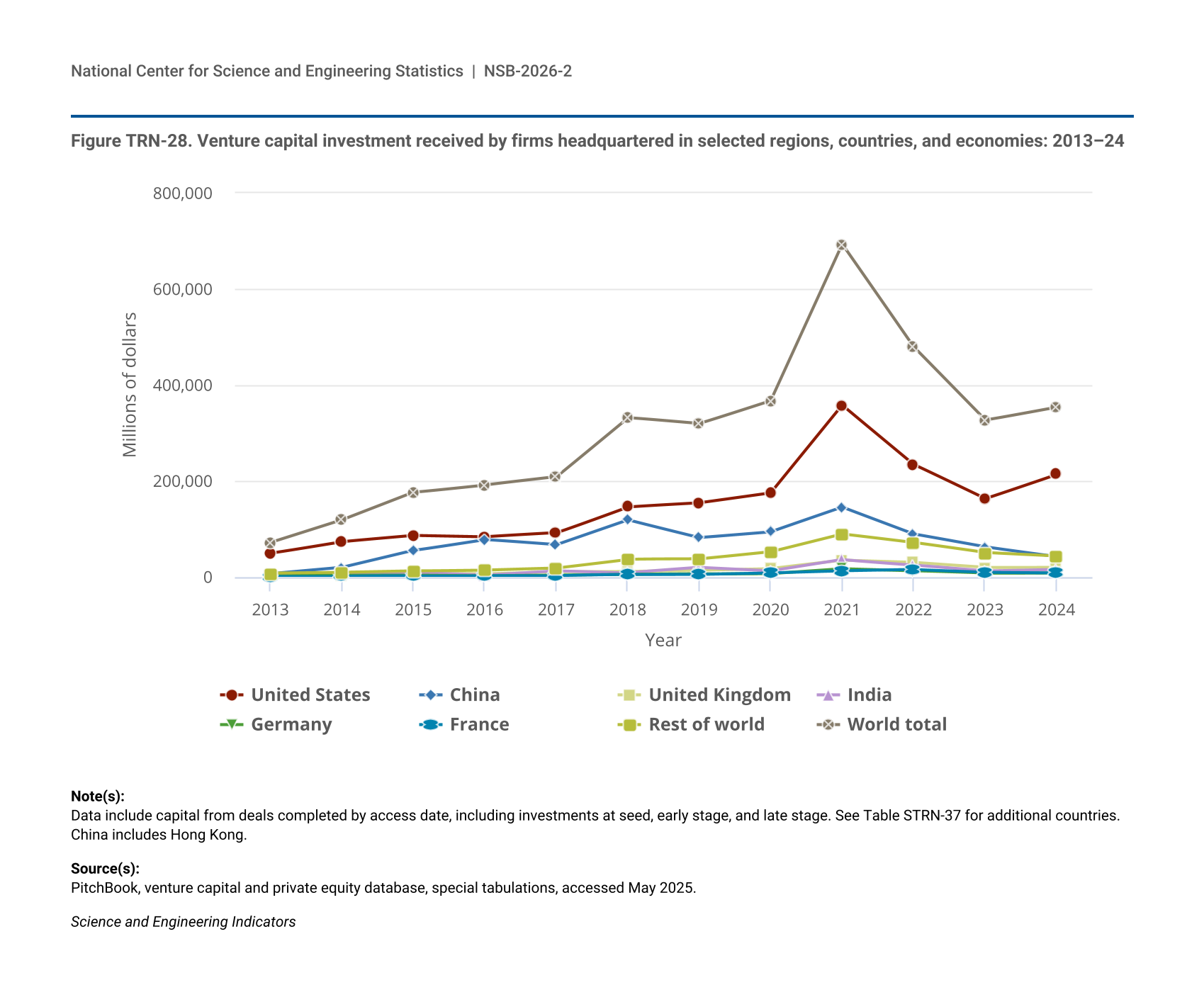
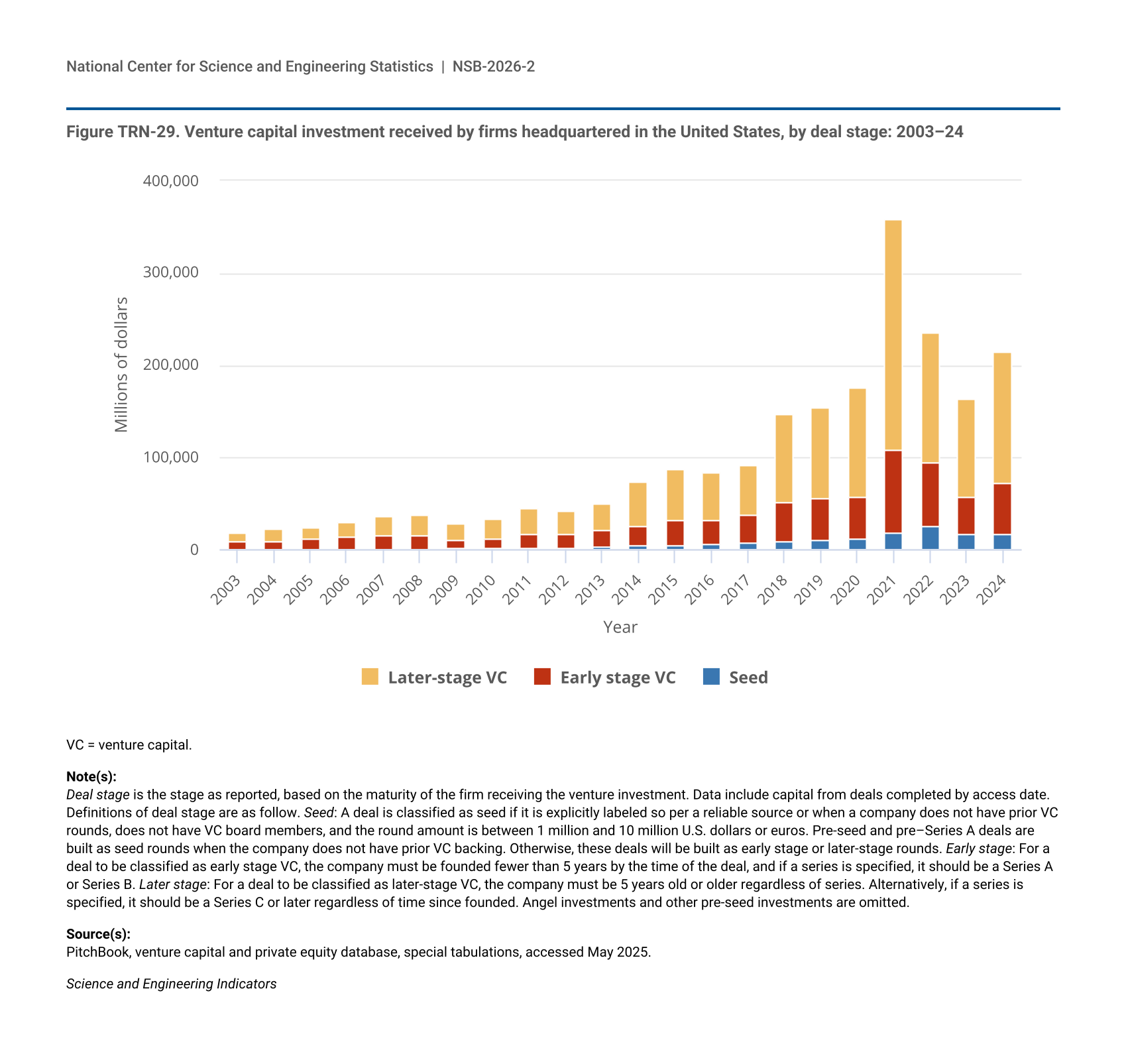
Venture capital investment, by region, country, or economy of receiving firm: 2013–24
TitleVenture capital investment, by region, country, or economy of receiving firm: 2013–24
NumberSTRN-38
STRN-38
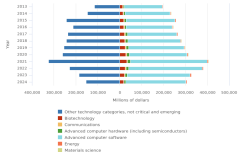
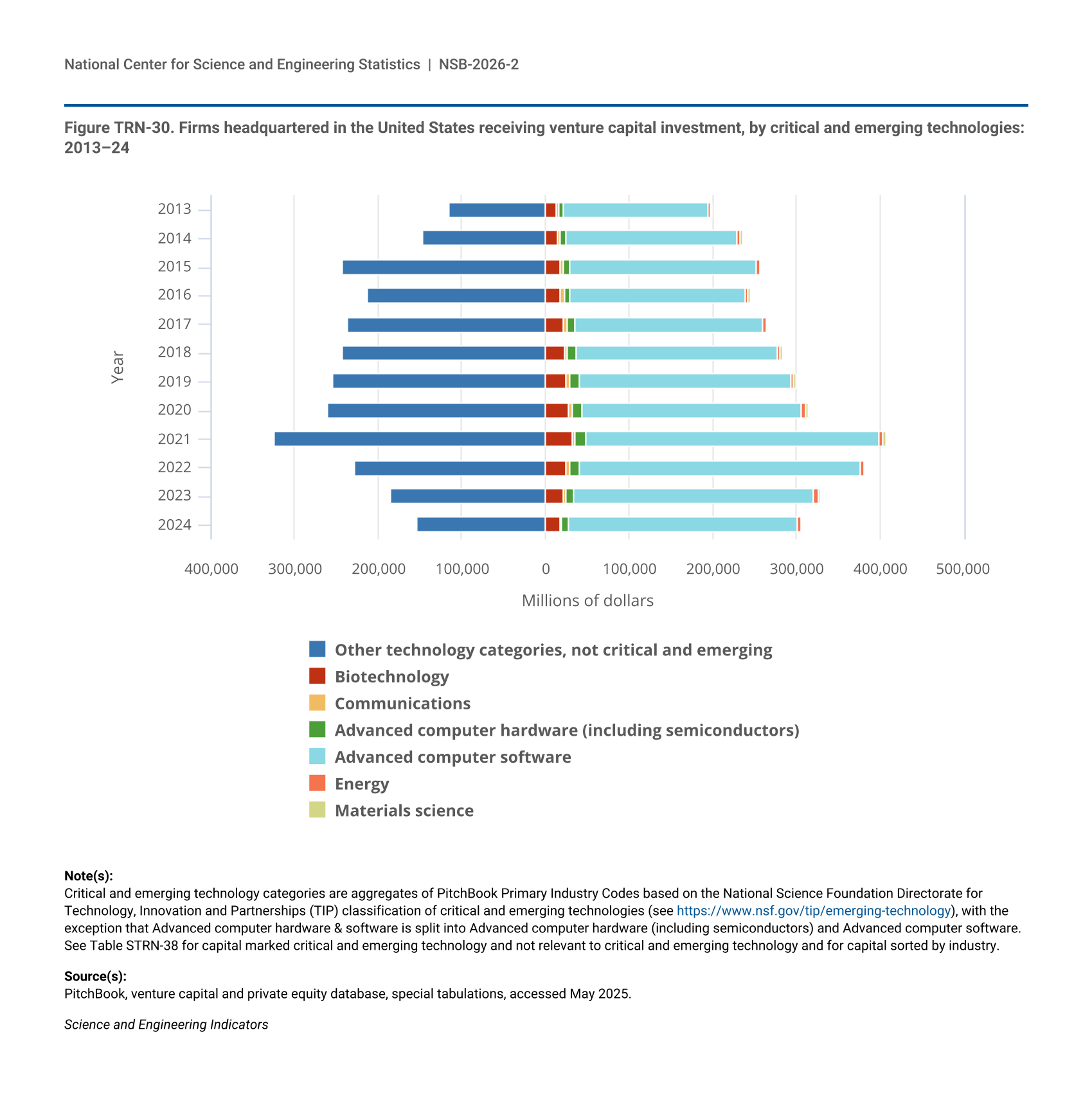
Firms headquartered in the United States receiving venture capital investment, by industry: 2013–24
TitleFirms headquartered in the United States receiving venture capital investment, by industry: 2013–24
NumberSTRN-39
STRN-39
OECD classification of industries, by R&D intensity category
TitleOECD classification of industries, by R&D intensity category
NumberSTRN-40
STRN-40
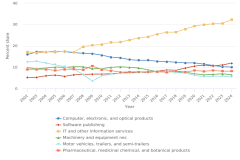
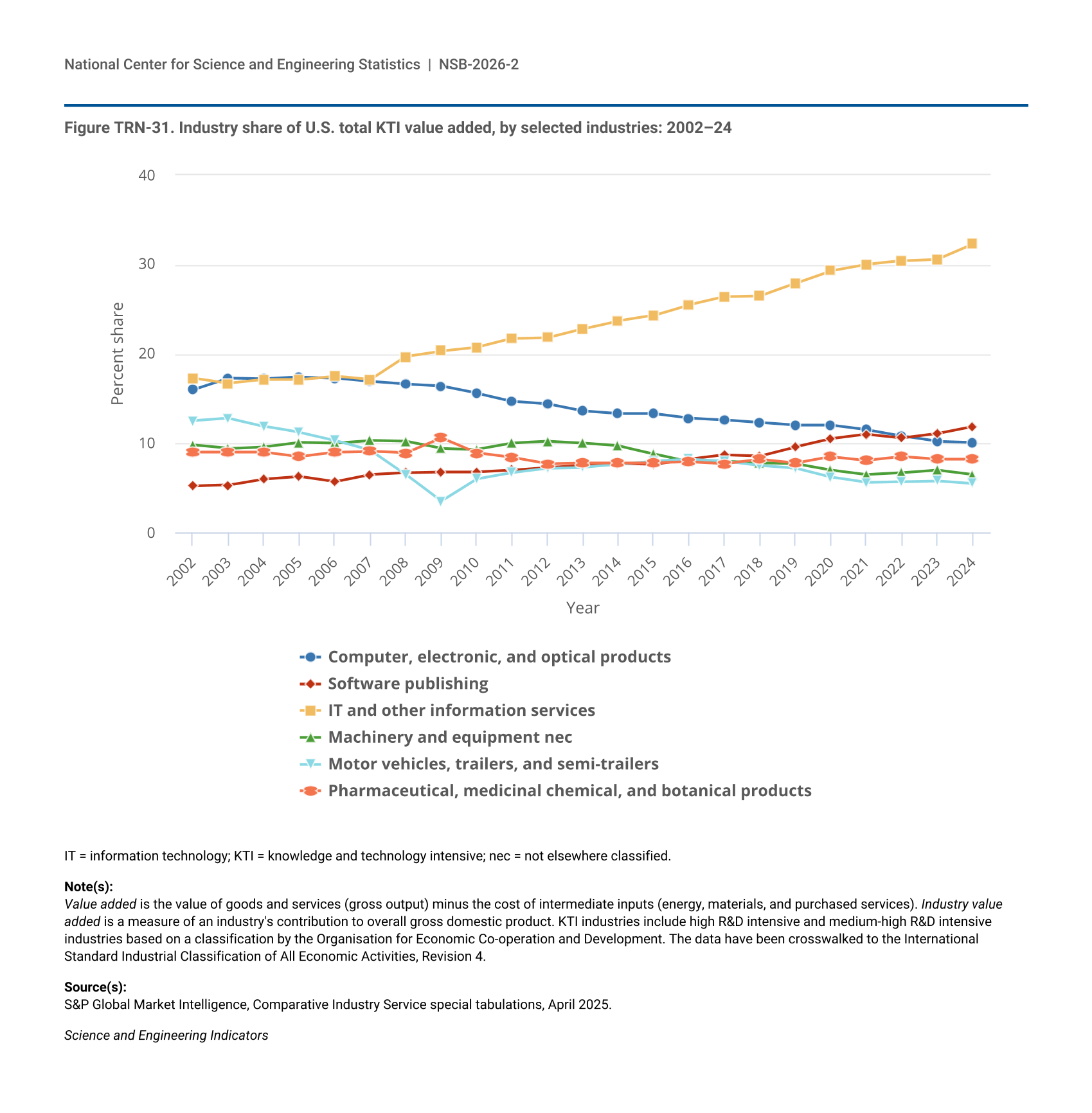
U.S. KTI industry value added: 2002–24
TitleU.S. KTI industry value added: 2002–24
NumberSTRN-41
STRN-41
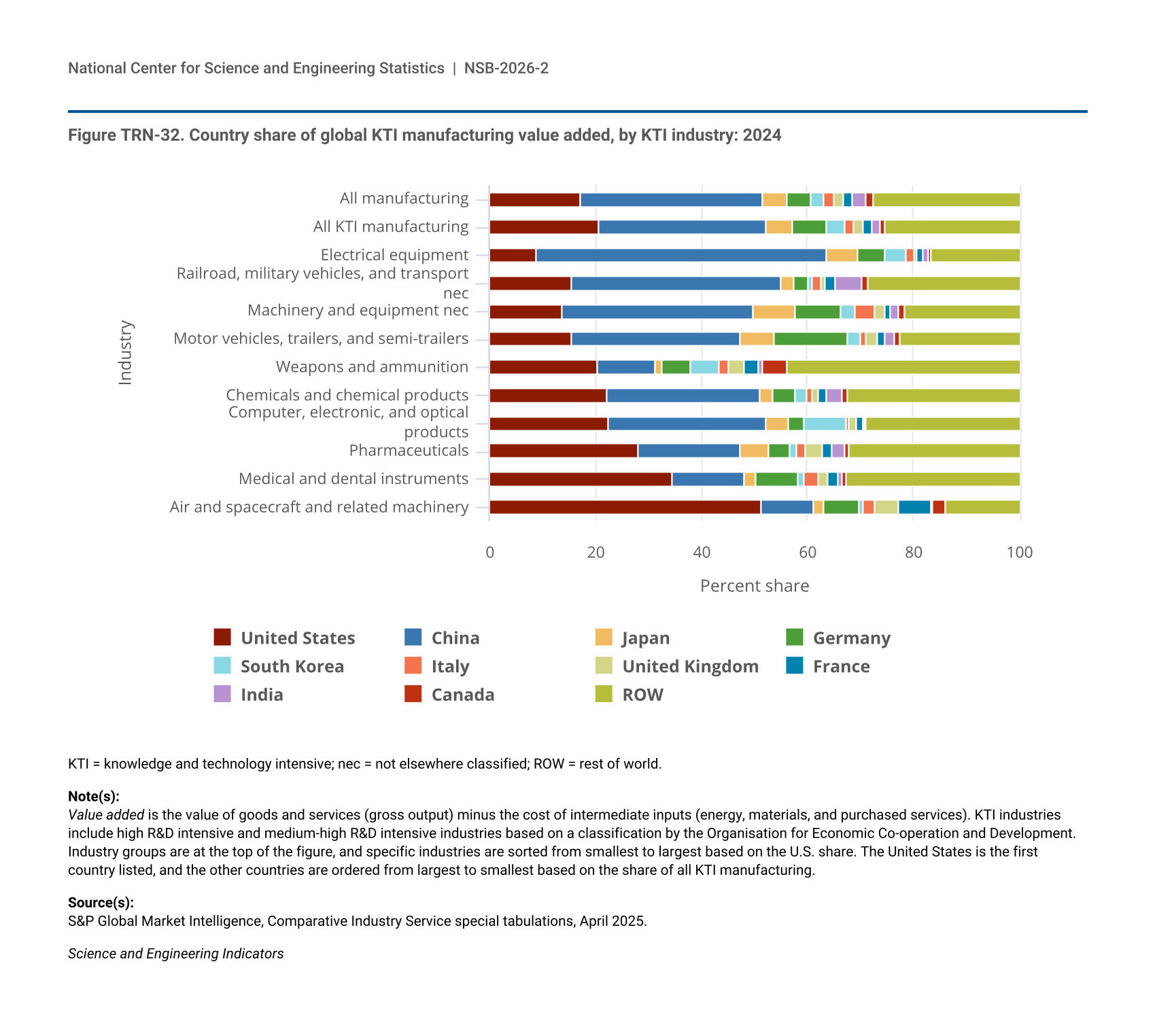
Value added, by industry, for the world and for selected economies: 2002–24
TitleValue added, by industry, for the world and for selected economies: 2002–24
NumberSTRN-42
STRN-42
KTI value added, GDP, and KTI value added as a share of domestic GDP for selected economies: 2002–24
TitleKTI value added, GDP, and KTI value added as a share of domestic GDP for selected economies: 2002–24
NumberSTRN-43
STRN-43
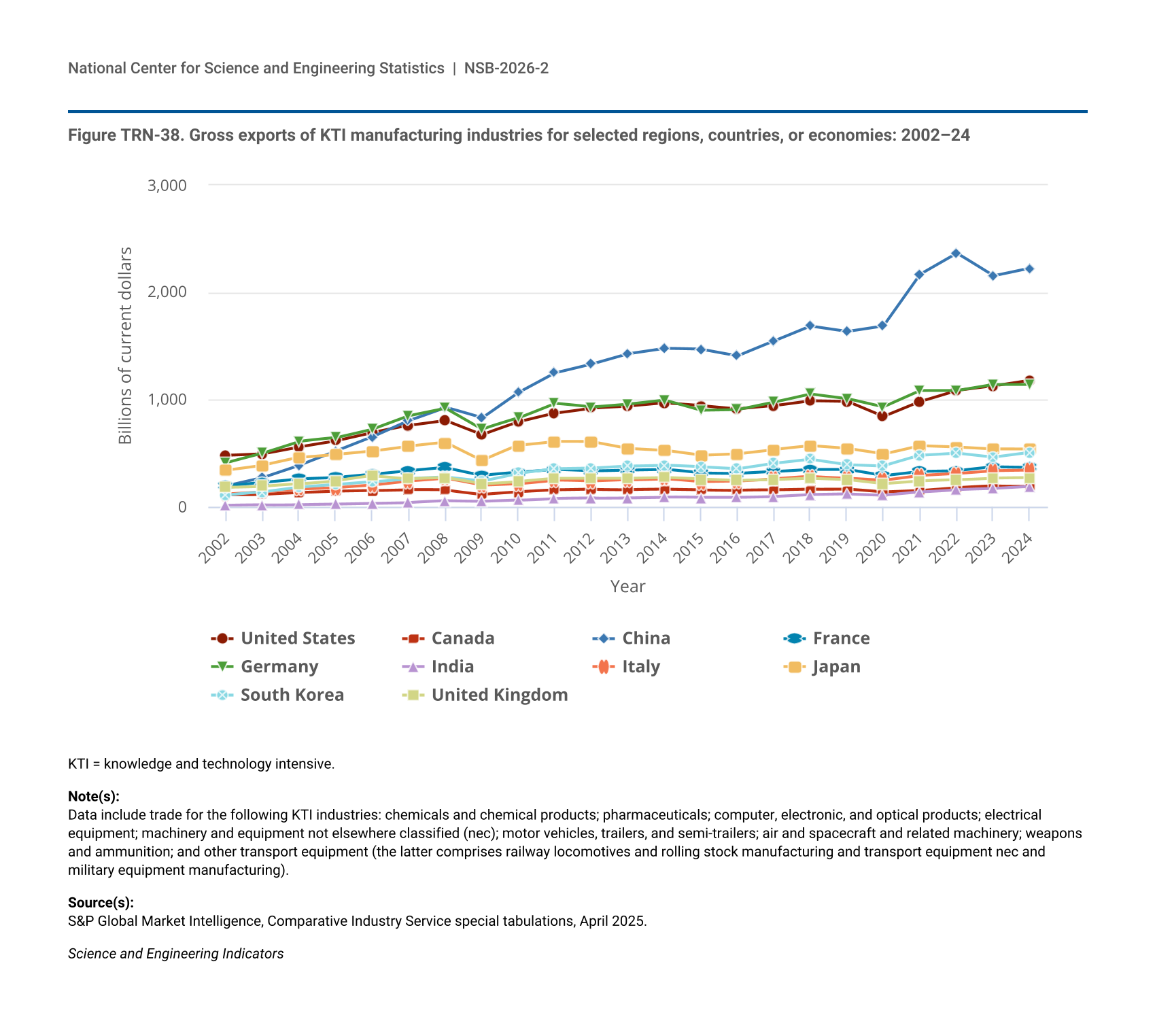
Gross exports of goods trade, for the world and for selected economies: 2002–24
TitleGross exports of goods trade, for the world and for selected economies: 2002–24
NumberSTRN-44
STRN-44
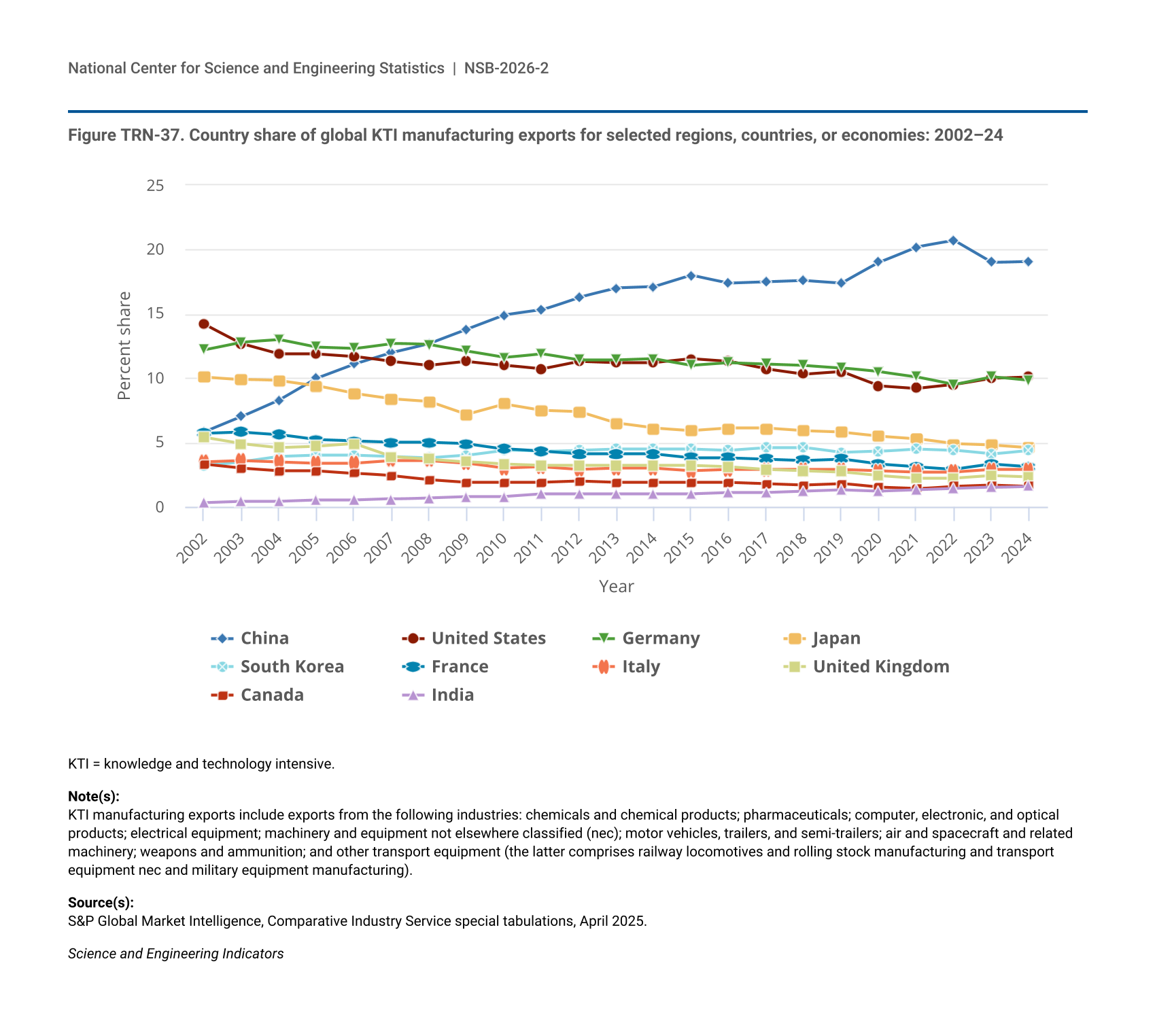
KTI manufacturing exports as a share of total manufacturing exports for selected economies: 2002–24
TitleKTI manufacturing exports as a share of total manufacturing exports for selected economies: 2002–24
NumberSTRN-45
STRN-45
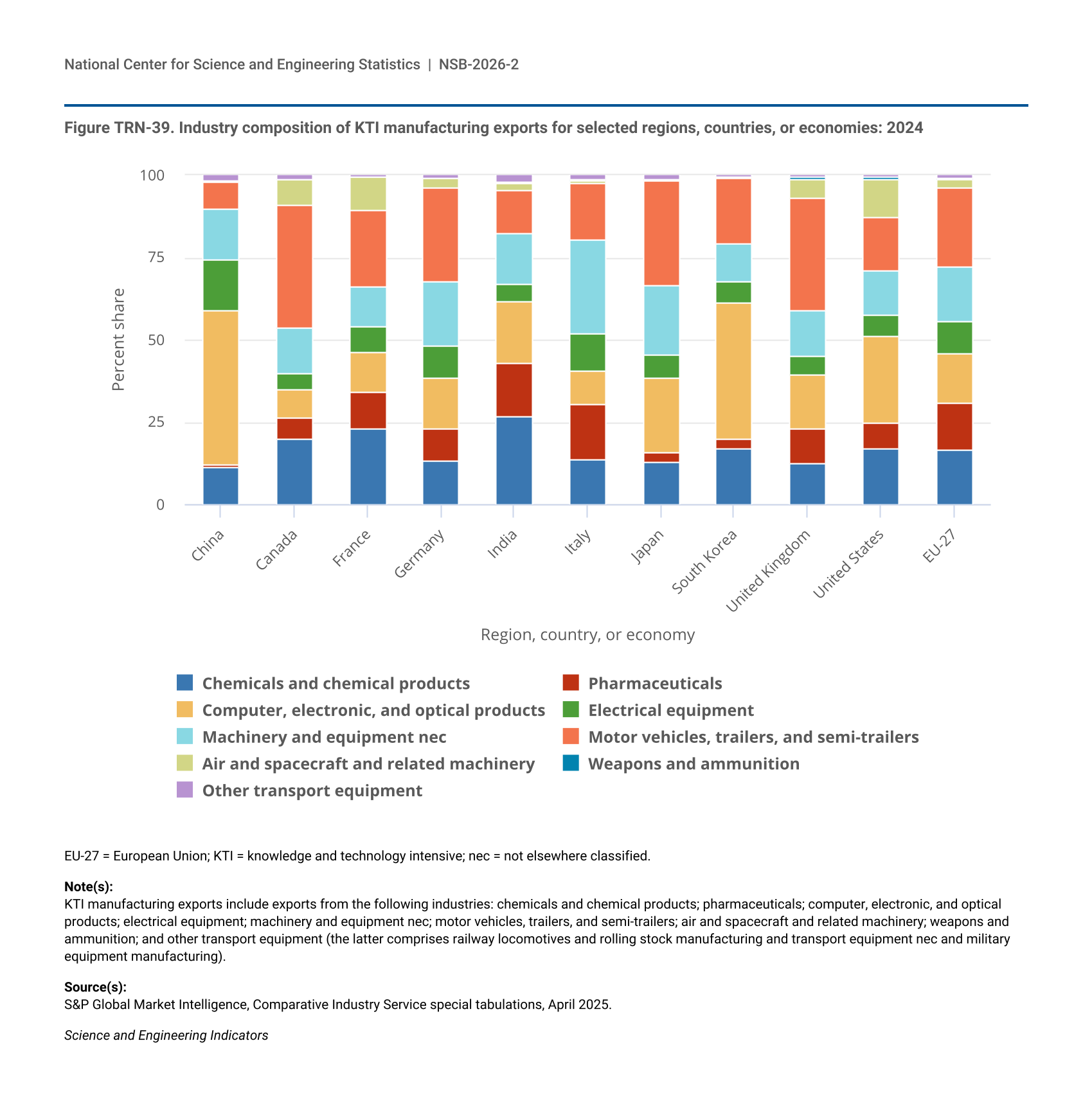
KTI manufacturing exports, imports, and trade balance for selected economies: 2002–24
TitleKTI manufacturing exports, imports, and trade balance for selected economies: 2002–24